
Supplier Screening Services in Pennsylvania
Finding a Supplier Is Only the Beginning, Knowing Who to Trust Matters More
A supplier can look promising during initial research and still fail to meet the requirements of a serious procurement project. A professional website, competitive pricing, impressive product catalogue, or quick response does not necessarily demonstrate manufacturing capability, production capacity, quality consistency, or long-term reliability.
That is why Supplier Screening is an important stage between supplier discovery and commercial engagement. For businesses in Pennsylvania sourcing products, components, or custom manufacturing from India, structured supplier screening helps procurement teams evaluate potential manufacturers before investing significant time in RFQs, negotiations, sampling, tooling, or production.
At Kaizen Global Sourcing, Supplier Screening is designed to help businesses move beyond initial supplier information and develop a clearer understanding of whether a manufacturer is appropriate for the specific sourcing requirement.


Why Supplier Screening Matters
Supplier Discovery answers: “Who could potentially manufacture this?”
Supplier Screening asks: “Which of these manufacturers appear capable of meeting our requirements?”
That distinction is important. A manufacturer may produce a similar product but lack the required:
- Production capacity
- Technical expertise
- Quality systems
- Manufacturing processes
- Export experience
- Documentation
- Industry experience
- Communication capability
Identifying these differences before commercial commitment can help procurement teams make better sourcing decisions.
Why Pennsylvania Businesses Benefit from Supplier Screening
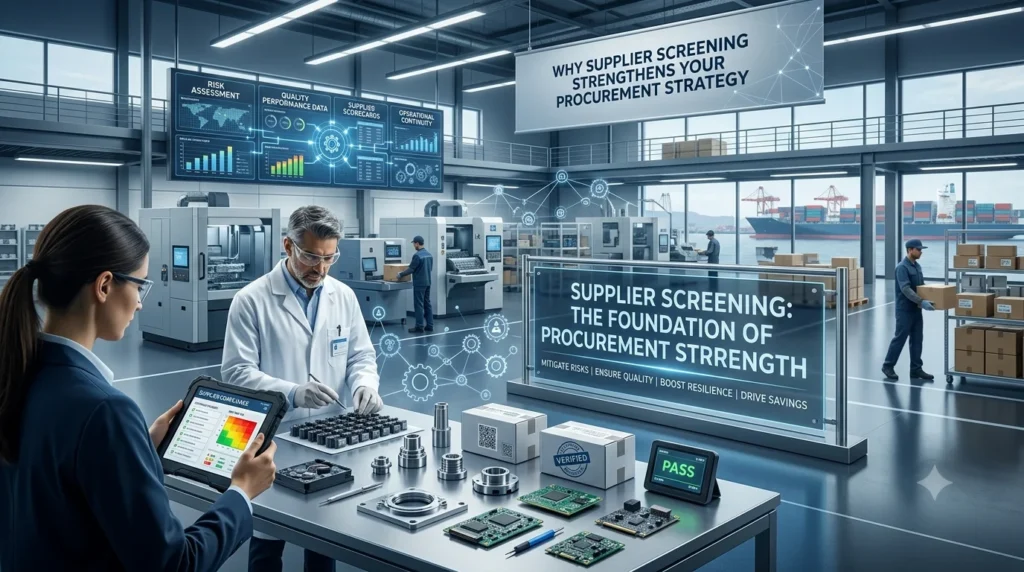
Pennsylvania has a broad industrial and manufacturing base spanning advanced manufacturing, medical devices, pharmaceuticals, chemicals, metals, machinery, food processing, aerospace, energy, and automotive-related industries.
Many businesses in these sectors cannot afford to evaluate suppliers solely on price. A supplier may need to demonstrate specialised technical capabilities, consistent quality, adequate production capacity, and the ability to meet defined specifications.
For Pennsylvania companies sourcing from India, supplier screening provides an additional layer of confidence before manufacturers move into quotation, sampling, or production discussions.
Supplier Discovery vs. Supplier Screening
These two stages work together but answer different procurement questions.
Supplier Discovery | Supplier Screening |
|---|---|
Identifies potential manufacturers | Evaluates shortlisted manufacturers |
Creates the initial supplier pool | Narrows the supplier pool further |
Focuses on supplier relevance | Focuses on supplier capability |
Early sourcing stage | Pre-RFQ evaluation stage |
Answers “Who could fit?” | Answers “Who appears qualified?” |
Separating these activities helps procurement teams avoid treating every supplier discovered online as equally suitable.
What Should Procurement Teams Screen?
The screening criteria should reflect the product and business requirements, but commonly relevant areas include:
Can the supplier manufacture the required product using appropriate processes and equipment?
Can the supplier support expected order volumes and production schedules?
Does the manufacturer have appropriate quality controls and inspection practices?
Has the supplier worked with similar products, materials, specifications, or industries?
Does the supplier have experience supporting international customers and export requirements?
1. Can the supplier communicate effectively and support the expected procurement relationship?
2. Screening these areas gives businesses a more complete picture than reviewing supplier pricing alone.

How Kaizen Approaches Supplier Screening
Kaizen Global Sourcing uses a procurement-focused approach to help businesses evaluate shortlisted manufacturers before they progress further into the sourcing process. The screening process can consider:
- Supplier manufacturing capabilities
- Relevant industry experience
- Production capacity
- Quality practices
- Technical suitability
- Export experience
- Business responsiveness
- Overall sourcing fit
The objective is not to label every supplier as simply “good” or “bad.” It is to understand which suppliers appear most aligned with the buyer’s requirements and which areas may require additional validation.
Procurement Consultant's Insight
Supplier screening is where procurement teams begin separating supplier availability from supplier suitability. A manufacturer being able to make a product is not the same as being able to make it consistently, commercially, and at the required scale.
Mini Procurement Scenario
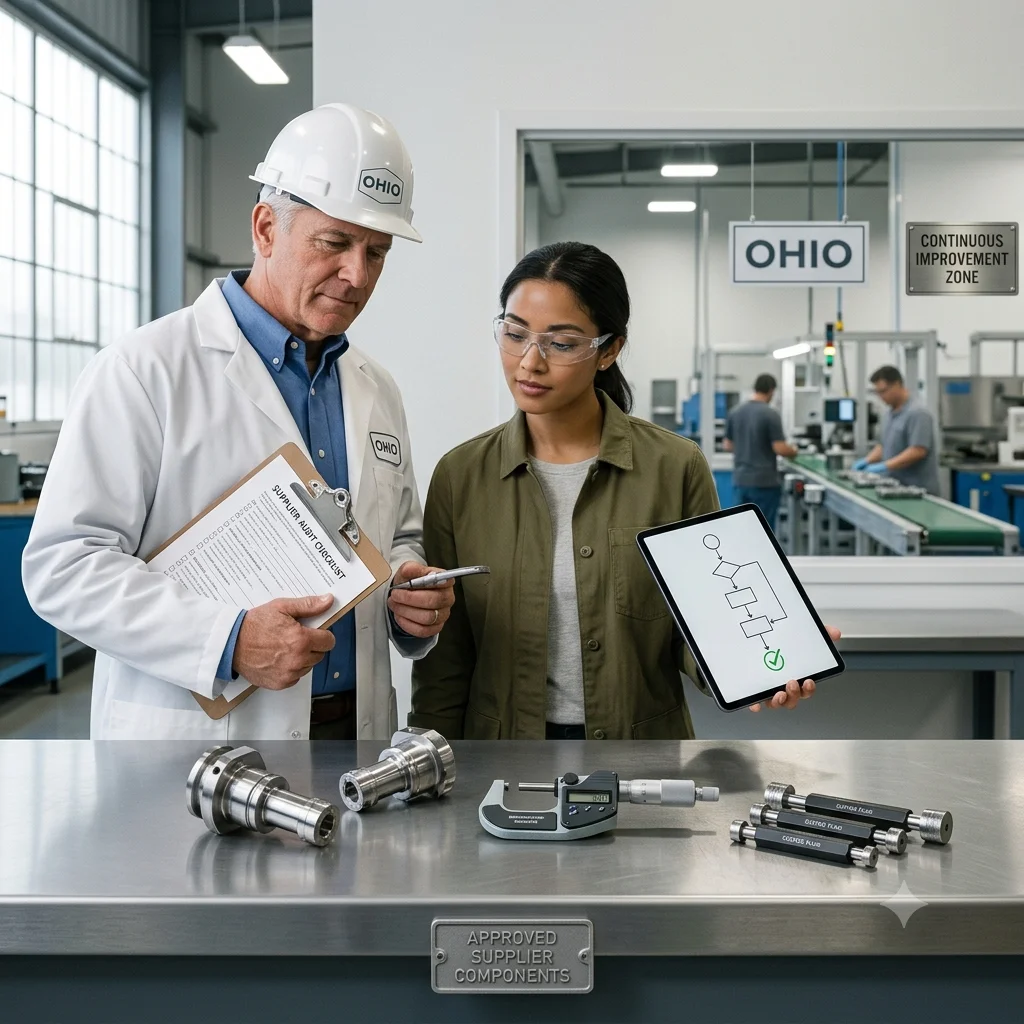
A Pennsylvania industrial equipment manufacturer identified several Indian suppliers for a specialised fabricated component.
Three suppliers appeared suitable based on their product portfolios. During screening, however, one had limited production capacity, another lacked relevant export experience, while the third demonstrated stronger alignment with the required manufacturing process and quality expectations. The procurement team therefore moved forward with a smaller, more relevant supplier group rather than requesting quotations from every manufacturer initially identified. This reduced unnecessary supplier communication and created a stronger foundation for the RFQ stage.
Basic Supplier Check vs. Structured Screening
Basic Supplier Check | Structured Supplier Screening |
|---|---|
Reviews company profile | Reviews procurement suitability |
Checks product availability | Evaluates manufacturing capability |
Looks at basic supplier information | Considers capacity, quality and experience |
Often price-oriented | Capability-oriented |
Limited risk visibility | Greater early-stage risk visibility |
What This Means for Your Procurement Strategy
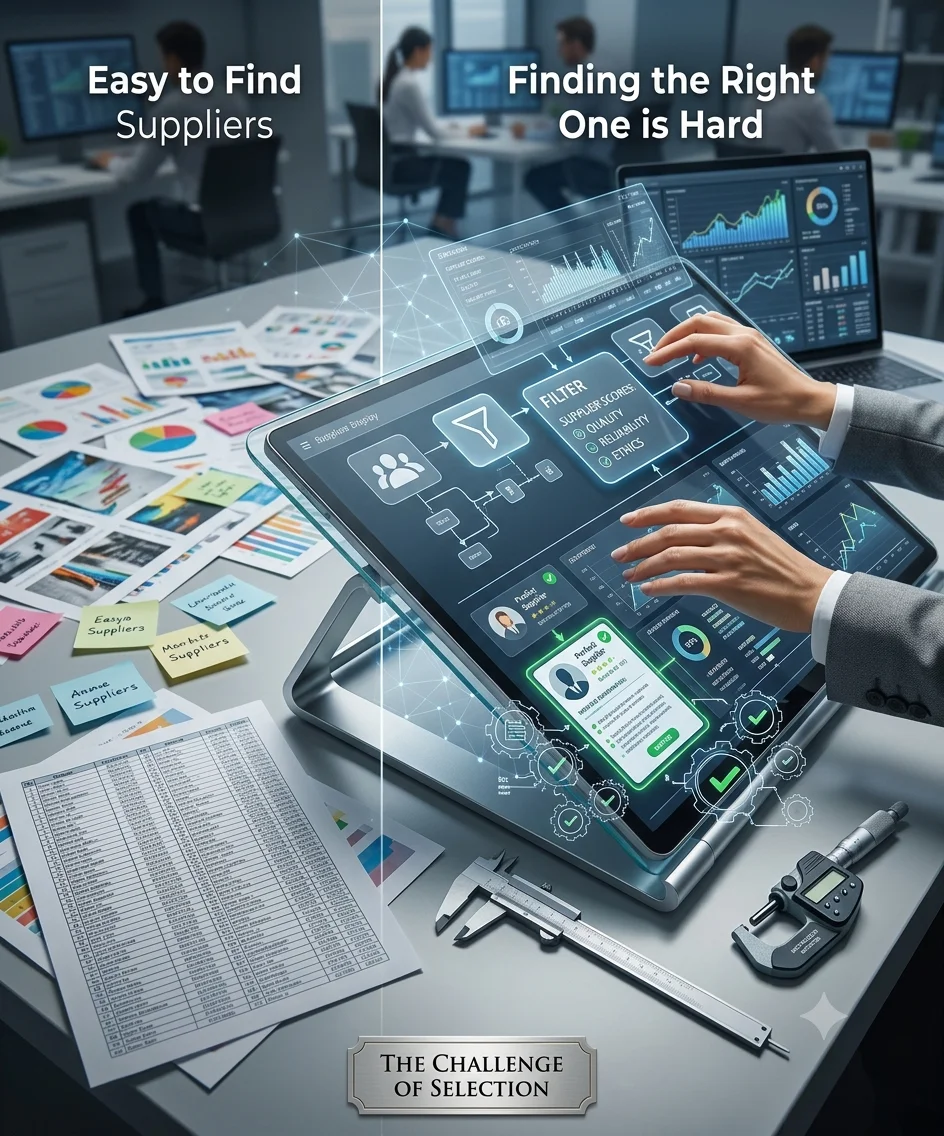
Supplier Screening should take place before substantial commercial and production commitments. For Pennsylvania businesses sourcing from India, it helps narrow the supplier pool before procurement teams invest additional resources into quotation requests, negotiations, sampling, and qualification.
A structured sequence looks like this:
Supplier Discovery → Supplier Screening → RFQ Coordination → Quote Review → Sampling & Qualification → Ongoing Sourcing
Each stage progressively reduces uncertainty. Supplier Screening is the stage where businesses move from potential suppliers toward credible sourcing candidates.
How Procurement Leaders Think Differently
Experienced procurement teams understand that supplier screening is not about finding reasons to reject manufacturers. It is about identifying which suppliers deserve deeper commercial and technical evaluation.
Traditional Supplier Evaluation | Strategic Supplier Screening |
|---|---|
Focuses mainly on price | Evaluates overall supplier suitability |
Relies heavily on supplier claims | Looks at relevant capability and evidence |
Screens suppliers after quotations | Screens suppliers before RFQs |
Treats all shortlisted suppliers similarly | Prioritises suppliers according to project fit |
Reacts to supplier problems later | Identifies potential concerns earlier |
This approach allows procurement teams to invest more time in suppliers that have a stronger chance of becoming successful long-term partners.
Basic Supplier Check vs. Professional Screening
Basic Supplier Check | Professional Supplier Screening |
|---|---|
Reviews website and catalogue | Evaluates manufacturing capability |
Checks product availability | Reviews technical suitability |
Looks at advertised pricing | Considers production capacity and commercial fit |
Limited risk assessment | Identifies potential sourcing risks |
Broad supplier evaluation | Requirement-specific evaluation |
The difference is important because supplier visibility is not the same as supplier capability.
Without Screening vs. With Structured Screening
Without Structured Screening | With Structured Screening |
|---|---|
Larger supplier pool to evaluate | More focused supplier shortlist |
Higher uncertainty | Greater visibility into supplier capability |
More unnecessary RFQs | More targeted quotation requests |
Potential issues discovered later | Potential concerns identified earlier |
More procurement effort | More efficient supplier evaluation |
Supplier screening creates an additional decision point before procurement resources are invested further.
Common Supplier Screening Mistakes
A professional website can provide useful information, but it does not by itself demonstrate production consistency or suitability for a specific project.
A lower price does not compensate for inadequate quality, capacity, technical capability, or delivery performance.
A supplier may be capable of producing the product but unable to support the required production volume or schedule.
Relevant manufacturing experience can be particularly important for technically demanding or highly regulated products.
Requesting quotations from suppliers before understanding their basic suitability can create unnecessary procurement work.
Decision Matrix – Where Does Supplier Screening Fit?
Procurement Requirement | Recommended Kaizen Service |
|---|---|
Need to identify manufacturers | Supplier Discovery |
Need to evaluate shortlisted suppliers | Supplier Screening |
Need structured quotations | RFQ Coordination |
Need to compare proposals | Quote Review & Comparison |
Need to validate samples | Sampling & Qualification |
Need ongoing supplier coordination | Ongoing Sourcing Desk |
This progression creates a structured path from supplier identification to long-term sourcing management.
Questions Procurement Managers Frequently Ask
What is the main purpose of supplier screening?
The purpose is to determine whether potential suppliers appear capable and suitable enough to progress to the next stage of procurement.
Should supplier screening happen before RFQs?
Generally, yes. Screening potential suppliers before requesting quotations helps procurement teams focus their RFQ activity on manufacturers that better match the project requirements.
What if a supplier meets the product requirement but lacks capacity?
That supplier may not be suitable for the project if production volume or delivery requirements cannot be supported. Capacity should therefore be considered alongside product capability.
Can screening identify every supplier risk?
No. Screening reduces uncertainty but cannot eliminate every risk. Further quotation review, sampling, qualification, quality checks, and ongoing supplier management may still be required.
Supplier Comparison & Sourcing FAQs
Is supplier screening better than choosing manufacturers based on online reviews?
Online reviews can provide context, but they should not replace requirement-based supplier evaluation. Screening considers whether the manufacturer fits the specific technical, operational, and sourcing requirements.
Should Pennsylvania businesses screen Indian suppliers before requesting quotations?
For many international sourcing projects, screening first can be beneficial because it helps procurement teams focus quotation requests on manufacturers that appear more capable of meeting the project’s requirements.
Is the cheapest screened supplier automatically the best supplier?
No. Price should be evaluated alongside technical capability, quality, production capacity, lead time, export experience, commercial terms, and long-term suitability.
How does Kaizen compare with an online supplier directory?
An online directory primarily provides access to supplier information. Kaizen’s sourcing approach supports a structured procurement process that can move from discovery and screening through RFQs, quotation comparison, qualification, and ongoing sourcing.
Can Kaizen screen suppliers that a Pennsylvania business has already identified?
Yes. Businesses may already have potential manufacturers identified and still require structured evaluation before progressing to commercial engagement.
Is supplier screening useful for specialised manufacturing requirements?
Yes. It can be particularly valuable when products require specialised equipment, engineering expertise, quality controls, certifications, production capacity, or industry-specific experience.
What makes Kaizen a stronger option than handling supplier screening alone?
Businesses with strong internal procurement resources may handle screening themselves. Kaizen can add value when the project requires India-market knowledge, supplier research, international communication, or additional procurement capacity.
What happens after supplier screening?
The next stage is RFQ Coordination, where qualified or shortlisted suppliers can receive structured quotation requirements so their proposals can be compared more effectively.
Key Takeaways
Continue Your Procurement Journey
Once suitable suppliers have been identified and screened, the next challenge is obtaining quotations that are clear, complete, and genuinely comparable.
RFQ Coordination Services help establish a consistent technical and commercial framework for supplier quotations.
This creates a logical progression:
Supplier Discovery → Supplier Screening → RFQ Coordination
The objective is to ensure procurement teams do not simply collect supplier prices—they collect proposals that can actually support a sound sourcing decision.
Move From Supplier Screening to Better RFQs
For Pennsylvania businesses sourcing from India, supplier screening provides greater confidence about who should be invited to quote.
Kaizen Global Sourcing can then help coordinate the RFQ stage so shortlisted manufacturers receive clear requirements and procurement teams have a stronger foundation for comparing supplier proposals. The result is a more structured path from supplier identification to commercial evaluation.