
RFQ Coordination Services for Businesses in North Carolina
The Best Procurement Decisions Begin with Better RFQs, Not Better Negotiations
Many businesses believe procurement success starts when suppliers submit competitive quotations. In reality, it starts much earlier—with the quality of the Request for Quotation (RFQ). A poorly prepared RFQ often results in inconsistent pricing, different production assumptions, missing commercial details, and multiple rounds of clarification. Even experienced manufacturers cannot provide accurate quotations when product specifications, quantities, quality expectations, or delivery requirements are incomplete.
For businesses across North Carolina sourcing products or components from India, RFQ Coordination is more than an administrative task. It is the process that creates consistency before supplier quotations are received, making procurement decisions more informed, transparent, and commercially reliable. At Kaizen Global Sourcing, RFQ Coordination Services in North Carolina helps businesses organize supplier communication, standardize project requirements, and create a quotation process that supports meaningful supplier comparisons rather than simply collecting prices.

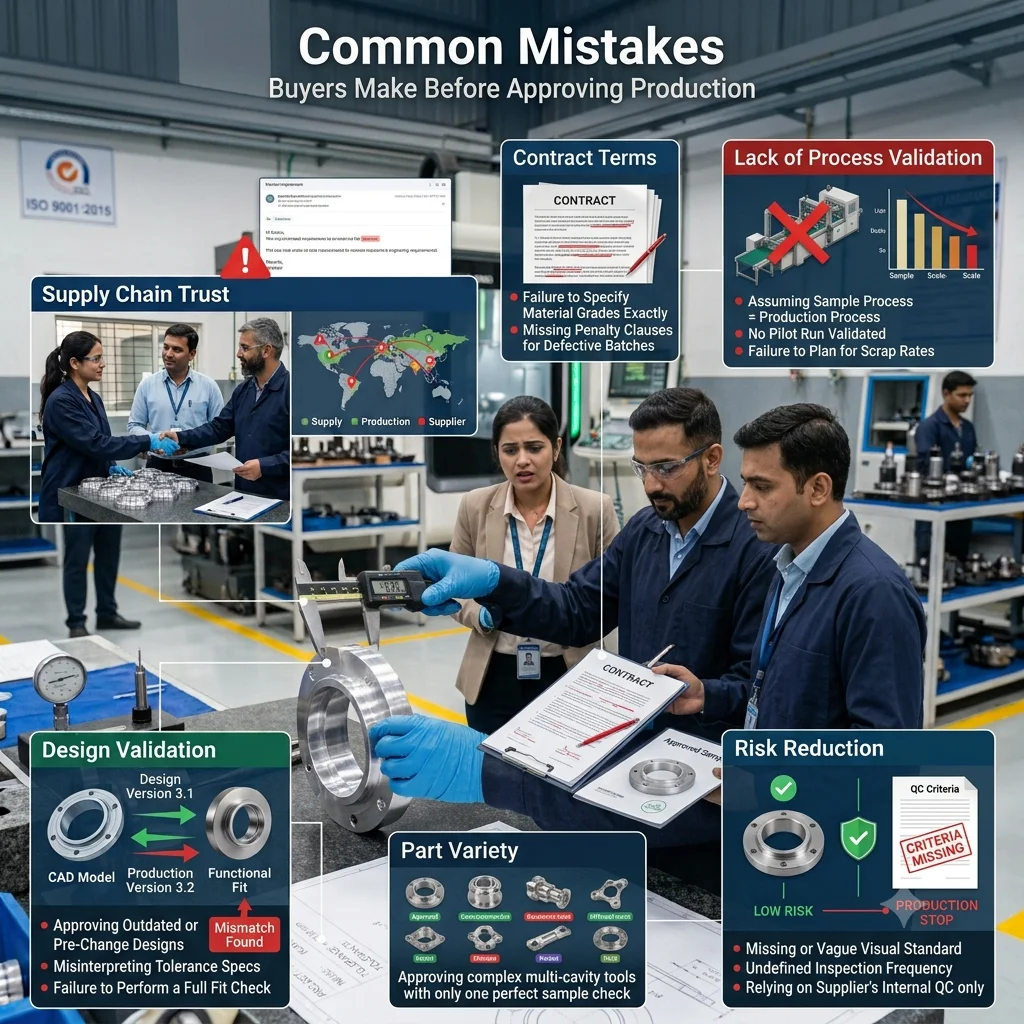
Why RFQ Coordination Matters Before Comparing Suppliers
Every quotation reflects the information a supplier receives. If different suppliers interpret the project differently, comparing their quotations becomes almost impossible.
Imagine requesting quotations from five manufacturers without specifying material grades, production volumes, packaging requirements, or inspection expectations. Each supplier may prepare a quotation based on different assumptions. While all five responses relate to the same product, they no longer represent the same scope of work. This creates unnecessary confusion during procurement and often leads to additional negotiations, revised quotations, and delayed supplier selection.
A structured RFQ process reduces these risks by ensuring every shortlisted manufacturer receives the same technical and commercial requirements before preparing a quotation.
Why North Carolina Businesses Need Structured RFQs
North Carolina’s economy continues to grow through industries such as aerospace, furniture manufacturing, textiles, life sciences, biotechnology, industrial equipment, and advanced manufacturing. Many businesses within these sectors rely on international sourcing to access specialised manufacturing capabilities and improve supply chain flexibility.
As sourcing projects become more technical, RFQs need to communicate far more than pricing requests. They should clearly define manufacturing expectations, quality standards, production requirements, delivery timelines, and commercial assumptions. The more structured the RFQ, the easier it becomes to compare supplier proposals and reduce procurement uncertainty.

Sending RFQs vs. Managing RFQs Strategically
Many businesses assume RFQ coordination simply means emailing suppliers. Experienced procurement teams approach it very differently.
Basic RFQ Process | Structured RFQ Coordination |
|---|---|
Send the same email to multiple suppliers | Standardise technical and commercial requirements |
Compare whatever quotations are received | Ensure suppliers quote against the same project scope |
Resolve misunderstandings after quotations arrive | Reduce ambiguity before quotations are prepared |
Focus primarily on pricing | Focus on quotation quality and comparability |
The objective isn’t to obtain more quotations. The objective is to obtain better quotations.
How Kaizen Coordinates RFQs
Kaizen Global Sourcing approaches RFQ Coordination by first understanding the procurement requirements behind the project. Instead of simply forwarding product specifications, the emphasis is on organising technical and commercial information so suppliers receive a consistent understanding of the project.
This structured approach helps businesses:
RFQ Coordination becomes the foundation for the next stage of sourcing—evaluating supplier quotations with confidence.
Procurement Consultant's Insight
Negotiating a poor quotation rarely produces a better procurement outcome. Building a clear RFQ before quotations are requested usually creates more value than negotiating prices after inconsistent quotations have already been received.
Mini Procurement Scenario

A North Carolina industrial equipment manufacturer requested quotations from four suppliers for fabricated metal components. Although every supplier received the same product drawing, material specifications and packaging requirements were interpreted differently. The quotations varied widely, making comparison difficult. After restructuring the RFQ with clearly defined technical and commercial requirements, the revised quotations became far more consistent. The procurement team was able to compare suppliers based on actual manufacturing capability and commercial value instead of assumptions.
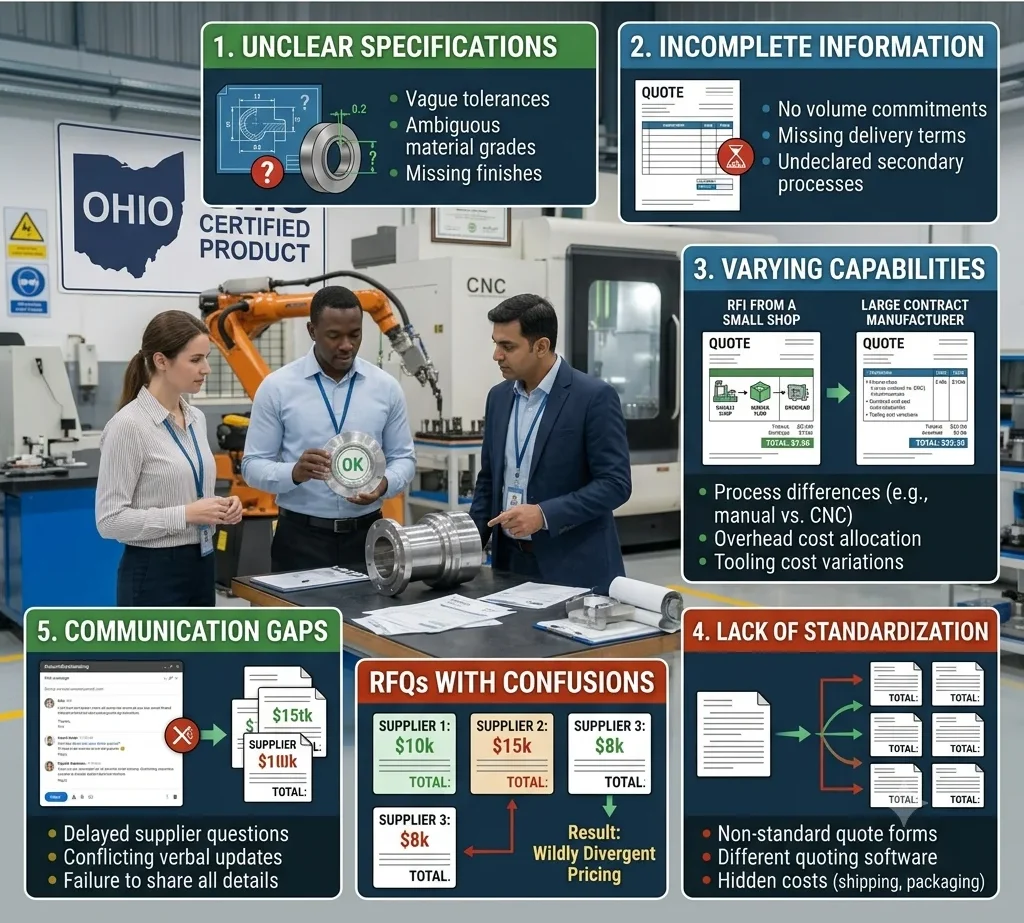
How Procurement Leaders Build Better RFQs
Successful procurement teams understand that the purpose of an RFQ is not simply to obtain prices. it’s to ensure every supplier is quoting against the same expectations.
Instead of asking, “Who can offer the lowest price?”, procurement leaders ask:
- Are all suppliers quoting the same material specifications?
- Have we defined our quality and inspection expectations?
- Are packaging and logistics requirements clearly documented?
- Can we compare quotations fairly without making assumptions?
When these questions are answered before the RFQ is issued, supplier quotations become significantly more meaningful and easier to evaluate.
Comparing an Unstructured RFQ with a Structured RFQ Process
Businesses often underestimate how much an RFQ influences the quality of supplier quotations.
Unstructured RFQ Process | Structured RFQ Coordination |
|---|---|
Limited product details | Complete technical and commercial requirements |
Different supplier assumptions | Standardised project scope for all suppliers |
Difficult quotation comparison | Consistent and comparable quotations |
Multiple clarification rounds | Fewer follow-up discussions |
Procurement decisions based on incomplete information | Better commercial visibility before supplier selection |
A structured RFQ doesn’t guarantee identical quotations—but it ensures differences are based on genuine manufacturing capability rather than inconsistent information.
Common Procurement Mistakes During the RFQ Stage
Many sourcing challenges begin long before production starts. Some of the most common RFQ mistakes include:
❌ Requesting quotations before finalising product specifications.
❌ Providing different information to different suppliers.
❌ Focusing only on unit pricing instead of total procurement value.
❌ Omitting packaging, inspection, testing, or delivery expectations.
❌ Comparing quotations without understanding supplier assumptions.
Avoiding these mistakes helps procurement teams make faster, more informed sourcing decisions.
How Procurement Leaders Think Differently
Average Buying Approach | Procurement Leadership Approach |
|---|---|
Send RFQs to as many suppliers as possible | Shortlist qualified manufacturers before issuing RFQs |
Compare the lowest prices | Compare total commercial value and manufacturing assumptions |
Clarify requirements after receiving quotations | Define requirements before quotations are requested |
Negotiate every quotation individually | Create comparable quotations from the start |
The strongest procurement teams spend more time preparing RFQs and less time correcting quotation inconsistencies later.
Decision Matrix – Is RFQ Coordination the Right Next Step?
Your Current Situation | Recommended Next Step |
|---|---|
Still researching manufacturers | Supplier Discovery |
Have shortlisted suppliers | RFQ Coordination |
Already received quotations | Quote Review & Comparison |
Supplier selected but sample pending | Sampling & Qualification Support |
Production has started | Ongoing Sourcing Desk |
What Procurement Managers Commonly Ask Before Moving Forward
Should every supplier receive exactly the same RFQ?
Yes. Providing consistent technical and commercial information creates a fair basis for quotation comparison and reduces procurement uncertainty.
Can I request quotations before completing supplier screening?
It’s generally more effective to screen suppliers first. Requesting quotations from manufacturers that may not meet your requirements can increase workload and make supplier selection more difficult.
Why do quotations differ even when suppliers receive the same drawing?
Drawings alone rarely capture every commercial and manufacturing expectation. Material grades, inspection standards, production volumes, packaging, lead times, and payment terms can all influence how suppliers prepare quotations.
Should I negotiate prices immediately after receiving quotations?
Not always. Procurement teams should first confirm that all quotations are based on the same assumptions before entering commercial negotiations.
FAQs for RFQ Coordination Services in North Carolina
Is RFQ coordination different from simply requesting quotations?
Yes. Requesting quotations is an activity, while RFQ coordination is a structured process that helps ensure suppliers receive consistent information and prepare comparable commercial proposals.
Should I compare supplier quotations before confirming they are based on the same requirements?
No. Comparing prices without validating the underlying assumptions can lead to incorrect procurement decisions.
Can better RFQs reduce sourcing risks?
Yes. Clearly structured RFQs reduce misunderstandings, improve quotation quality, and support more informed supplier selection.
Is it better to send RFQs to many suppliers or a qualified shortlist?
A qualified shortlist generally produces more meaningful quotations than contacting a large number of manufacturers with varying capabilities.
Why do suppliers sometimes ask so many clarification questions?
Clarification requests often indicate that technical or commercial information is incomplete. A well-prepared RFQ reduces unnecessary back-and-forth communication.
How does Kaizen Global Sourcing support RFQ coordination?
Kaizen helps businesses organise project information, standardise supplier communication, and improve quotation consistency before commercial evaluation begins.
What happens after RFQ coordination?
Once supplier quotations have been received, the next step is Quote Review & Comparison, where procurement teams evaluate commercial proposals before selecting a manufacturing partner.
Does RFQ coordination only benefit large organisations?
No. Businesses of all sizes benefit from receiving clearer, more comparable quotations when sourcing internationally.
Key Takeaways
Before moving to quotation evaluation, remember:
Continue Your Procurement Journey
You've completed RFQ Coordination. What's next?
Once suppliers submit their quotations, the focus shifts from collecting proposals to evaluating them objectively.
Your next step is Quote Review & Comparison Services, where supplier quotations are assessed based on pricing, manufacturing assumptions, lead times, commercial terms, and overall procurement value not just the lowest unit cost.
This stage helps procurement teams make confident sourcing decisions before approving samples or moving into production.
Ready to Improve the Quality of Your Supplier Quotations?
A well-prepared RFQ does more than generate prices—it creates the foundation for informed procurement decisions. By standardising project requirements and improving supplier communication, businesses can reduce sourcing uncertainty and compare manufacturers with greater confidence.
If your business in North Carolina is sourcing products or components from India, Kaizen Global Sourcing can help coordinate your RFQ process, streamline supplier communication, and support a more structured approach to international procurement.
Partner with Kaizen for Long-Term Procurement Success
Successful sourcing is not measured by a single purchase order it is measured by the consistency, reliability, and performance of your supplier relationships over time.
If your business in North Carolina is sourcing products from India, Kaizen Global Sourcing can help coordinate supplier communication, support production management, and provide ongoing procurement expertise that strengthens your international supply chain.