
Supplier Discovery Services in Indiana
Finding an Indian Supplier Is Easy. Finding the Right One Isn't.
For an Indiana business considering India as a sourcing destination, the first challenge is rarely finding a list of manufacturers. The difficult part is determining which suppliers are actually worth evaluating. A supplier may appear attractive because it offers competitive pricing or has an impressive website. But procurement teams also need to understand:
- Can the supplier manufacture to the required specifications?
- Does its production capability match the required process and volume?
- Has it worked with export-oriented buyers?
- Can it support the required quality expectations?
- Is the supplier commercially suitable?
- Can communication and follow-up be managed effectively?
- Is the supplier appropriate for a long-term sourcing relationship?
Kaizen Global Sourcing helps Indiana companies identify potential Indian manufacturing partners based on the actual sourcing requirement rather than simply providing a directory of suppliers.


Why Supplier Discovery Matters in India Sourcing
Supplier discovery establishes the quality of the supplier pool that procurement teams will evaluate later.
If the initial supplier pool is poorly matched, every subsequent stage becomes harder. A procurement team may spend time requesting quotations from suppliers that:
- Do not have the right manufacturing process
- Cannot meet required volumes
- Lack the necessary technical capability
- Are unsuitable for the product category
- Do not understand the buyer’s requirements
- Are not commercially competitive
- Cannot support the expected relationship
A structured discovery process helps reduce this wasted effort.
Supplier List vs. Supplier Discovery
Basic Supplier Search | Structured Supplier Discovery |
Focuses on finding names | Focuses on finding relevant suppliers |
May rely heavily on online directories | Considers product, process, volume, and requirements |
Large list can create more work | Smaller, more relevant supplier pool |
Limited understanding of capability | Capability becomes part of the evaluation |
Buyer performs most initial research | Sourcing partner helps organize discovery |
Can create unnecessary RFQs | Better supplier fit before RFQ stage |
The objective is not to find the largest number of suppliers. It is to identify the right suppliers to evaluate.
Why Indiana Businesses Are Looking at Global Sourcing
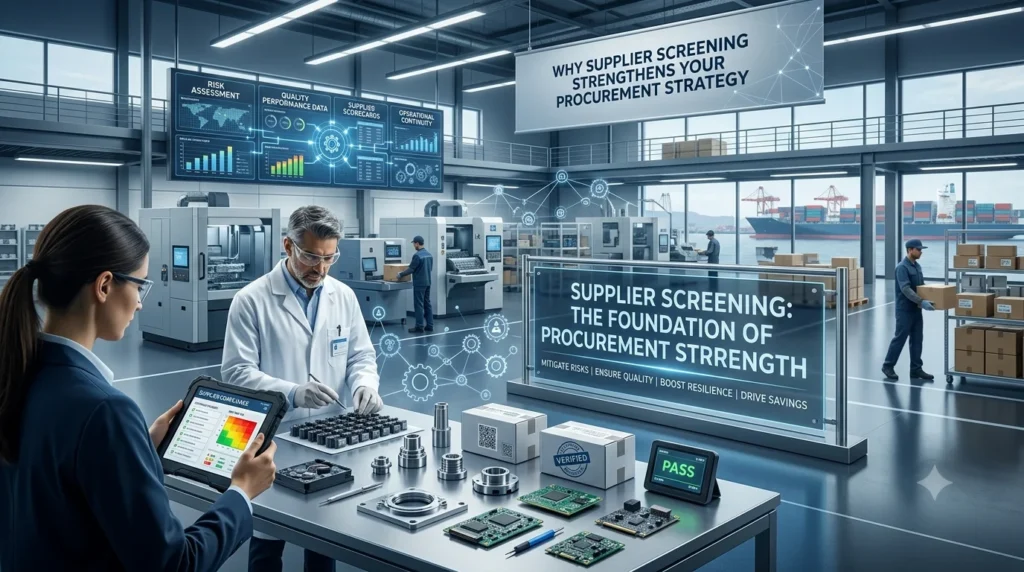
Indiana has a strong manufacturing and industrial base, making procurement requirements particularly relevant to components, equipment, engineered products, and industrial supply chains. Businesses may explore India when they want to:
- Develop an alternative supplier base
- Reduce dependence on a single sourcing region
- Evaluate manufacturing cost structures
- Add qualified overseas suppliers
- Support new product requirements
- Explore alternate production capacity
- Strengthen supply chain resilience
Kaizen’s current sourcing model is designed around helping U.S. companies evaluate India without requiring them to establish their own India sourcing office. For an Indiana procurement team, that means supplier discovery can begin with a defined requirement rather than an open-ended search.
What Kaizen Looks at During Supplier Discovery
Supplier discovery should begin with the buyer’s requirements. Kaizen’s sourcing process starts by understanding factors such as the product or category, expected volume, drawings or specifications, current supplier situation, and the reason India is being evaluated.
Product or Component
The supplier search needs to reflect exactly what the Indiana buyer wants to source. For example:
- Machined components
- Fabricated parts
- Industrial assemblies
- Engineered components
- Hardware
- Private-label products
- Custom-manufactured products
Production Volume
A supplier suitable for low-volume production may not be the right choice for a high-volume program. Volume expectations therefore need to be considered during discovery rather than after quotations are received.
Manufacturing Process
The appropriate supplier depends heavily on the production process. The search may need to consider capabilities such as:
- CNC machining
- Casting
- Forging
- Stamping
- Molding
- Surface processing
- Assembly
Kaizen's broader manufacturing network includes these types of capabilities.
Technical Requirements
Drawings, specifications, materials, tolerances, finishing requirements, and other technical details can influence which manufacturers are relevant.
Commercial Requirements
Supplier discovery should also consider the commercial side of the project.
This can include:
- Target pricing
- Minimum order requirements
- Lead-time expectations
- Export experience
- Packaging requirements
- Delivery expectations
Procurement Consultant Insight
The quality of a supplier shortlist depends on the quality of the sourcing brief.
One of the most common procurement mistakes is asking: “Can you find Indian suppliers for this product? “Without first defining what a suitable supplier actually means.
A stronger sourcing brief identifies:
- What are we buying?
- How will it be manufactured?
- How much do we need?
- What quality level is required?
- What commercial conditions matter?
- What would make a supplier unsuitable?
Once those criteria are established, supplier discovery becomes a procurement exercise rather than a simple internet search.
Mini Procurement Scenario: Indiana Manufacturer
Consider an Indiana manufacturer currently purchasing a machined component from a single overseas supplier.
The company wants to evaluate India as an alternative source. Instead of searching for “Indian machining companies” and contacting dozens of businesses, the procurement team defines:
- Component type
- Material
- Annual volume
- Required tolerances
- Finishing requirements
- Expected pricing
- Delivery expectations
- Required documentation
Kaizen can then use those requirements to structure the supplier discovery process and identify manufacturers whose capabilities are relevant to the project. The result is not simply a larger supplier list.
It is a more useful starting pool for the next procurement stage: supplier screening and RFQ coordination.
Broad Supplier Search vs. Requirement-Based Discovery
Factor | Broad Search | Requirement-Based Discovery |
Starting point | Product name | Complete sourcing requirement |
Supplier volume | Potentially very large | Focused supplier pool |
Manufacturing fit | Unclear | Considered early |
Volume compatibility | Often unknown | Considered during discovery |
Technical fit | Requires further research | Included in sourcing criteria |
Procurement workload | Higher | More focused |
Next step | More research | Screening and RFQ |
Common Supplier Discovery Mistakes
A low initial price means little if the supplier cannot consistently meet the specification or required volume.
Two suppliers may manufacture the same broad product but have very different processes, equipment, quality systems, and production capabilities.
More suppliers do not automatically mean better sourcing. An oversized list can slow down RFQs and make comparisons harder.
A supplier should be considered in relation to the buyer’s expected demand.
Sending RFQs before establishing whether a supplier is actually relevant can waste both the buyer’s and supplier’s time.
A professional website can be useful for initial research, but it should not replace structured supplier evaluation.
How Procurement Leaders Think Differently
An experienced procurement manager does not ask: “How many suppliers can we find?”
They ask: “Which suppliers are worth spending procurement time on?”
That distinction matters. Supplier discovery should create a qualified starting point for deeper evaluation, not simply produce a spreadsheet of company names.
Supplier Discovery Decision Matrix
Requirement | Priority | What Procurement Should Determine |
Product capability | High | Can the supplier make the required product? |
Manufacturing process | High | Does its process match the requirement? |
Production volume | High | Can it support expected demand? |
Technical capability | High | Can it work to required specifications? |
Quality expectations | High | Is its quality approach appropriate? |
Commercial fit | Medium/High | Could pricing and terms work? |
Export readiness | Medium/High | Can it support international buyers? |
Long-term potential | Medium | Could the supplier support future requirements? |
What Happens After Supplier Discovery?
Supplier discovery is the first stage, not the final procurement decision. Once potential Indian manufacturers have been identified, the sourcing process can continue through:
Supplier Discovery → Supplier Screening → RFQ Coordination → Quote Review & Comparison → Sampling & Qualification → Ongoing Sourcing
Kaizen’s current process follows this structured progression from understanding the requirement through supplier identification, RFQs, comparison, samples, and continued involvement.
FAQs About Supplier Discovery Services in Indiana
What is supplier discovery compared with supplier screening?
Supplier discovery focuses on finding potentially suitable Indian manufacturers. Supplier screening goes deeper by evaluating whether those suppliers actually meet the buyer’s capability, quality, commercial, and sourcing requirements.
Can Kaizen help Indiana companies find Indian manufacturers?
Yes. Kaizen works with U.S. companies to identify Indian manufacturers based on product category, process, volume, technical requirements, and commercial needs.
Is supplier discovery the same as receiving a supplier directory?
No. A directory primarily provides company names. A structured discovery process starts with the buyer’s requirements and looks for suppliers that are relevant to those requirements.
Should an Indiana company contact many Indian suppliers at once?
Not necessarily. A focused supplier pool can make RFQ management and supplier comparison more efficient than contacting a very large number of poorly matched companies.
What information should I provide before starting supplier discovery?
Useful information includes the product or component, drawings or specifications, material, expected volume, manufacturing process, quality requirements, delivery expectations, and any current sourcing challenges.
Can supplier discovery support supply chain diversification?
Yes. Identifying alternative Indian suppliers can be part of a broader strategy to diversify sourcing and reduce dependence on a single supplier or sourcing region.
Does finding a supplier mean the supplier is already qualified?
No. Discovery identifies potential suppliers. Screening, quotation review, sampling, and qualification are separate stages used to determine whether a supplier is appropriate for the specific procurement requirement.
What happens after Kaizen identifies potential suppliers?
The next stages can include supplier screening, RFQ coordination, quotation comparison, sample coordination, and early-stage qualification support.
Key Takeaways for Supplier Discovery Services in Indiana
Continue Your Procurement Journey
If your Indiana business is considering India as a sourcing option, start by defining the product category, technical requirements, expected volume, and commercial objectives. Kaizen Global Sourcing can then help structure the supplier discovery process and identify Indian manufacturers worth evaluating.
Ready to explore Indian suppliers for your Indiana business?
Start a sourcing conversation with Kaizen Global Sourcing.