
Supplier Discovery Services in Pennsylvania
The Right Supplier Can Shape the Entire Procurement Outcome
Successful international sourcing begins well before a quotation is received. The first and often most important decision is identifying manufacturers that genuinely match the business requirement. A supplier may appear suitable because it offers the right product, competitive pricing, or an impressive online presence. However, those factors alone do not establish whether the manufacturer has the production capability, quality standards, capacity, technical expertise, or export experience required for a successful long-term relationship. For businesses in Pennsylvania sourcing products, components, or custom manufacturing from India, structured Supplier Discovery Services provide a more focused starting point.
Instead of asking: “Where can we find a supplier?”
strategic procurement asks: “Which manufacturers are most suitable for our specific requirement?”
At Kaizen Global Sourcing, supplier discovery is designed around this second question.


Why Supplier Discovery Matters
Supplier Discovery creates the foundation for every procurement stage that follows. If the initial supplier shortlist is weak, procurement teams may spend significant time:
- Reviewing unsuitable manufacturers.
- Requesting unnecessary quotations.
- Comparing suppliers with different capabilities.
- Resolving avoidable sourcing issues.
- Repeating supplier research.
A focused discovery process helps businesses begin with manufacturers that are more closely aligned with their requirements. This can improve:
- Procurement efficiency
- Supplier relevance
- Sourcing visibility
- Supplier evaluation
- Long-term sourcing strategy
The goal isn’t to identify the largest possible number of manufacturers. The goal is to identify the right manufacturers.
Why Pennsylvania Businesses Benefit from Supplier Discovery
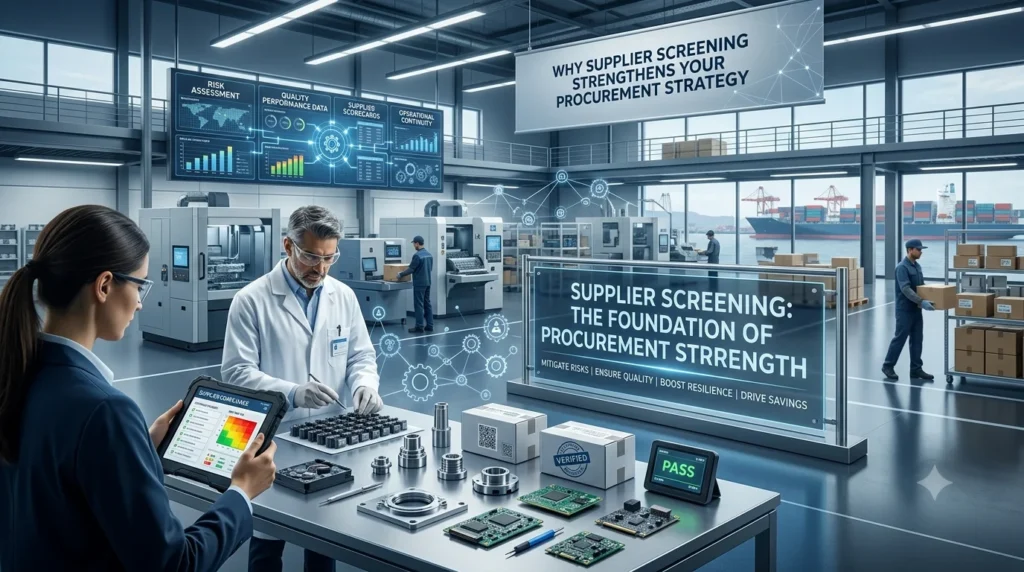
Pennsylvania has a diverse industrial economy with significant activity across advanced manufacturing, medical devices, pharmaceuticals, industrial machinery, metals, chemicals, food processing, aerospace, energy, and automotive-related manufacturing.
Businesses operating in these sectors often require suppliers with specialised technical capabilities rather than generic product availability. For companies sourcing from India, this makes supplier relevance particularly important.
A manufacturer capable of producing a standard component may not have the engineering capability, quality systems, production capacity, or experience required for a highly specialised Pennsylvania sourcing project. Structured Supplier Discovery helps procurement teams narrow the supplier landscape according to the actual requirements of the business.
Online Supplier Search vs. Strategic Supplier Discovery
Finding manufacturers online and strategically identifying suppliers are not the same activity.
Online Supplier Search | Strategic Supplier Discovery |
|---|---|
Produces broad supplier lists | Creates a focused supplier shortlist |
Relies heavily on available listings | Considers project-specific requirements |
Requires significant internal filtering | Reduces unnecessary evaluation |
Focuses on supplier availability | Focuses on supplier suitability |
Can create information overload | Creates a clearer procurement starting point |
A longer supplier list isn’t necessarily a better supplier list.
How Kaizen Approaches Supplier Discovery
Kaizen Global Sourcing approaches supplier discovery from a procurement perspective. The process begins with understanding what the business actually needs before identifying potential manufacturing partners. Depending on the sourcing requirement, relevant considerations can include:
Why India Is Relevant to Pennsylvania Sourcing
India has a broad manufacturing ecosystem spanning engineering, industrial components, pharmaceuticals, textiles, chemicals, automotive components, consumer products, machinery, and other sectors.
That breadth creates significant sourcing opportunities—but it can also make supplier identification more complex. The challenge isn’t necessarily finding an Indian manufacturer.
The challenge is finding an Indian manufacturer that fits your specific Pennsylvania business requirement. A structured discovery process helps procurement teams approach the Indian supplier market with clearer selection criteria.
Procurement Consultant's Insight
Supplier discovery should reduce uncertainty, not simply increase the number of supplier names on a spreadsheet. A focused shortlist gives procurement teams a stronger starting point for supplier evaluation and commercial sourcing.

Mini Procurement Scenario
A Pennsylvania medical equipment manufacturer needed an Indian manufacturing partner for specialised metal components. An initial supplier search produced a large number of manufacturers. However, several suppliers primarily served general industrial applications and did not demonstrate the technical or quality capabilities required for the project.
A more focused discovery process narrowed the potential supplier pool to manufacturers with relevant production experience, technical capabilities, and export suitability. This allowed the procurement team to move into supplier screening with a much more relevant starting point.
General Supplier Search vs. Procurement-Driven Discovery
| General Search | Procurement-Driven Discovery |
|---|---|
| “Find manufacturers” | Define what the manufacturer must be capable of doing |
| Broad supplier pool | Relevant supplier shortlist |
| Limited qualification criteria | Requirement-based selection |
| High manual research | More focused evaluation |
| Supplier quantity | Supplier suitability |
What This Means for Your Procurement Strategy
Supplier Discovery should be treated as the first strategic filter in the sourcing process. For Pennsylvania businesses sourcing from India, the objective is to identify manufacturers that have a reasonable potential to meet the project’s requirements before investing time in deeper supplier evaluation.
This creates a logical progression:
Discover → Screen → Request → Compare → Qualify → Manage
Each stage answers a different procurement question.
- Supplier Discovery answers: “Which manufacturers should we evaluate?”
- Supplier Screening then answers: “Which of these manufacturers are actually suitable?”
That distinction helps prevent procurement teams from moving too quickly into quotations before establishing supplier relevance.
How Procurement Leaders Think Differently
Experienced procurement teams understand that supplier discovery is not about finding the largest number of manufacturers. It is about finding manufacturers that have a realistic chance of meeting the business requirement.
Traditional Supplier Search | Strategic Supplier Discovery |
|---|---|
Search for as many suppliers as possible | Build a focused supplier pipeline |
Prioritise supplier availability | Prioritise supplier suitability |
Rely heavily on online directories | Use project-specific sourcing criteria |
Evaluate suppliers after contacting them | Define requirements before supplier outreach |
Focus on short-term availability | Consider long-term manufacturing suitability |
A strategic discovery process saves procurement teams from spending valuable time evaluating suppliers that were never a strong fit in the first place.
General Supplier Search vs. Professional Discovery
General Supplier Search | Professional Supplier Discovery |
|---|---|
Broad manufacturer lists | Focused supplier shortlist |
Limited project context | Requirement-specific research |
High manual filtering | More efficient supplier evaluation |
Supplier quantity becomes the priority | Supplier relevance becomes the priority |
Can create information overload | Creates a clearer procurement pathway |
For Pennsylvania companies sourcing from India, the difference can become particularly important when products require specialised manufacturing capabilities.
Without Structured Discovery vs. With Structured Discovery
Without Structured Discovery vs. With Structured Discovery
Without Structured Discovery | With Structured Discovery |
|---|---|
Large number of unsuitable suppliers | More focused supplier shortlist |
Longer evaluation process | More efficient supplier research |
Greater uncertainty | Better initial supplier alignment |
More unnecessary RFQs | More targeted supplier engagement |
Reactive procurement | Strategic sourcing preparation |
The purpose of discovery is to improve the quality of the supplier pipeline before deeper evaluation begins.
Common Supplier Discovery Mistakes
Supplier Discovery often appears straightforward, but overlooking key evaluation criteria at this stage can create significant sourcing challenges later.
A supplier appearing prominently in search results does not necessarily mean it is the best manufacturing partner for your requirement.
A low initial price can be meaningless if the manufacturer lacks the technical capability, quality controls, capacity, or export experience required.
More supplier conversations do not automatically produce better procurement outcomes.
A supplier may manufacture the desired product category but use processes that are unsuitable for the specific application.
Discovery identifies potential manufacturers. Screening evaluates whether those manufacturers are genuinely suitable.
Decision Matrix – Where Does Supplier Discovery Fit?
Current Procurement Need | Recommended Kaizen Service |
|---|---|
Need to identify suitable manufacturers | Supplier Discovery |
Need to evaluate shortlisted manufacturers | Supplier Screening |
Need structured supplier quotations | RFQ Coordination |
Need to compare supplier proposals | Quote Review & Comparison |
Need to validate production readiness | Sampling & Qualification |
Need continuing supplier coordination | Ongoing Sourcing Desk |
This sequence creates a structured path from identifying manufacturers to managing long-term sourcing relationships.
Questions Procurement Managers Frequently Ask
How does Supplier Discovery differ from searching Google for manufacturers?
Online searches can identify potential companies, but structured Supplier Discovery focuses on whether those manufacturers are relevant to the specific technical, commercial, and operational requirements of the sourcing project.
How many suppliers should be discovered before screening?
There is no universal number. The appropriate supplier pool depends on product complexity, industry, sourcing risk, manufacturing availability, and the level of competition required for the project.
Can Supplier Discovery reduce sourcing costs?
It can improve procurement efficiency by reducing the time spent evaluating suppliers that are unlikely to meet project requirements. Cost savings ultimately depend on supplier capability, commercial negotiations, volumes, and the specific sourcing project.
Should Pennsylvania businesses source directly from India or use a sourcing partner?
Either approach can work. Businesses with experienced internal sourcing teams may manage supplier discovery themselves, while a sourcing partner can provide additional market knowledge, supplier research, and procurement coordination.
Supplier Comparison & Sourcing FAQs
Is a supplier marketplace better than professional Supplier Discovery?
A marketplace can be useful for finding potential manufacturers, but it generally provides access rather than a complete procurement evaluation. Professional Supplier Discovery focuses on identifying suppliers according to the buyer’s specific requirements.
Is the largest supplier list better than a smaller qualified shortlist?
Not necessarily. A smaller, relevant shortlist can be more valuable because procurement teams can spend more time evaluating manufacturers that genuinely fit the project.
Should Pennsylvania businesses choose Indian suppliers based primarily on price?
No. Price is only one procurement factor. Technical capability, quality, production capacity, lead time, communication, export experience, and long-term suitability can also influence the sourcing decision.
How does Kaizen compare with businesses doing supplier research themselves?
Businesses can conduct supplier research internally. Kaizen can add value when the sourcing project requires structured supplier discovery, India-market knowledge, international supplier coordination, or additional procurement capacity.
What makes Kaizen different from a general sourcing marketplace?
A marketplace primarily connects buyers with suppliers. Kaizen’s sourcing model follows a broader procurement process covering Supplier Discovery, Supplier Screening, RFQ Coordination, Quote Review & Comparison, Sampling & Qualification, and Ongoing Sourcing.
Is Supplier Discovery useful for specialised Pennsylvania manufacturers?
Yes. Businesses requiring precision manufacturing, specialised materials, engineering components, industrial products, medical equipment, or other technically demanding products can benefit from requirement-based supplier identification.
Can Supplier Discovery guarantee that a manufacturer will be suitable?
No. Discovery identifies potentially suitable manufacturers. Detailed supplier screening and qualification are still important before making significant commercial or production commitments.
What comes after Supplier Discovery?
The next stage is Supplier Screening, where shortlisted manufacturers can be evaluated more closely for capability, quality, production readiness, and overall sourcing suitability.
Key Takeaways
Continue Your Procurement Journey
Once potential manufacturers have been identified, the next question is whether they can actually meet your requirements. Supplier Screening Services help procurement teams evaluate shortlisted manufacturers more closely, including their manufacturing capabilities, operational readiness, quality practices, production capacity, and overall suitability.
Supplier Discovery identifies the right possibilities. Supplier Screening helps determine which possibilities deserve to move forward.
Build a Stronger Supplier Pipeline in Pennsylvania
International sourcing works best when supplier selection is deliberate rather than rushed. For Pennsylvania businesses sourcing from India, Kaizen Global Sourcing can help identify manufacturers aligned with specific procurement requirements, creating a stronger foundation for supplier evaluation, quotation management, qualification, and long-term sourcing.
The objective is simple:
Find the right suppliers before spending resources on the wrong ones.