
Supplier Screening Services in Indiana
Finding Suppliers Is Only the First Step
A supplier can look suitable on paper and still be the wrong choice for your procurement requirement. This is one of the biggest risks businesses face when expanding sourcing into India.
A supplier may manufacture the right type of product but lack the capacity required for your annual volume. Another may offer an attractive quotation but have limited experience with your technical requirements. A third may appear established but may not be the right commercial or operational fit. For Indiana procurement teams, supplier screening provides the next layer of evaluation after supplier discovery.
Kaizen Global helps businesses move from a broad supplier list toward a more focused group of Indian manufacturers worth evaluating further.

Why Supplier Screening Matters
Supplier discovery answers: “Who could potentially supply this product?”
Supplier screening asks: “Which of these suppliers appear suitable for our actual requirement?”
That distinction can save procurement team’s significant time.
Identifies potential suppliers | Evaluates supplier suitability |
Creates an initial supplier pool | Narrows the pool |
Focuses on potential capability | Looks deeper at relevant capability |
Early-stage research | Structured supplier evaluation |
Broad information gathering | Requirement-based assessment |
Leads into screening | Leads toward RFQs and qualification |
A strong screening process helps prevent procurement teams from spending RFQ and evaluation time on suppliers that were never a good fit.
What Indiana Buyers Should Screen For
The right screening criteria depend on the product and sourcing requirement.
However, several areas are commonly important.
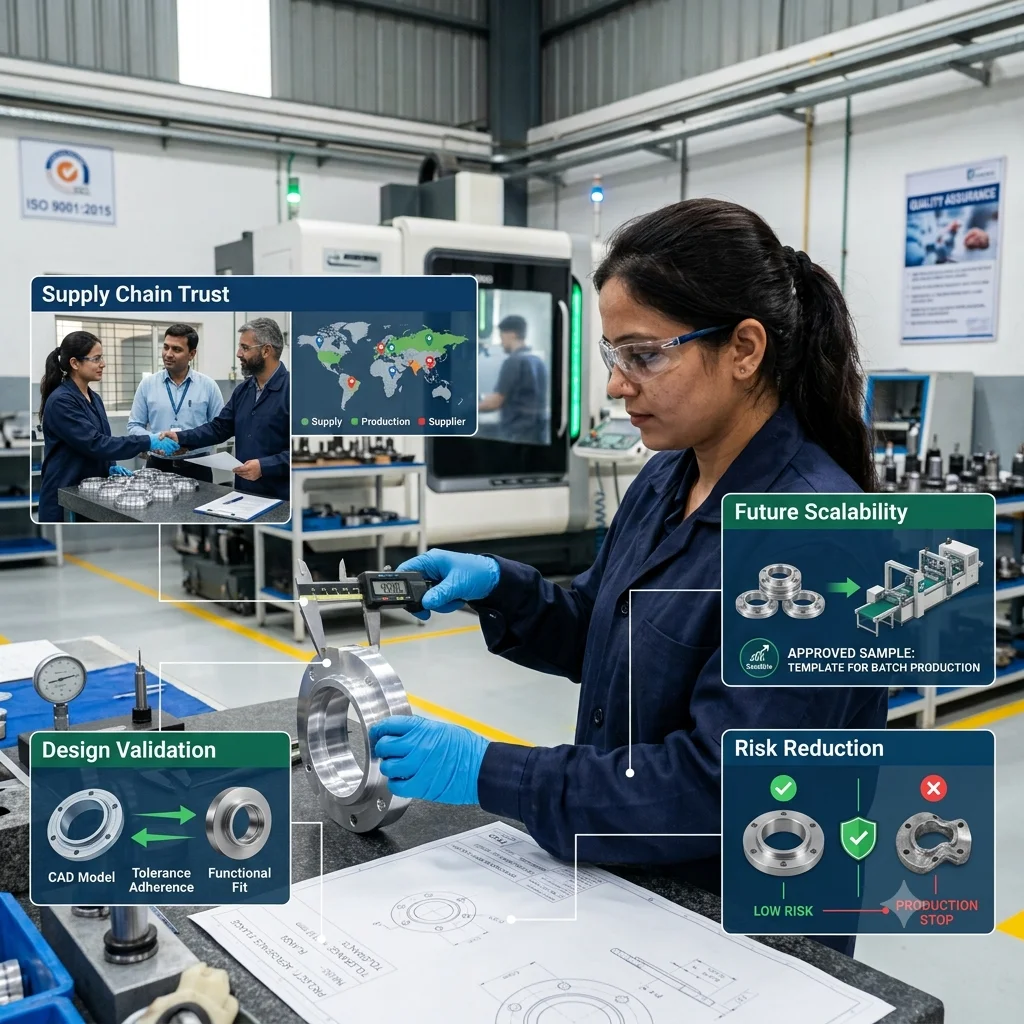
Manufacturing Capability
The supplier should have capabilities relevant to the product being sourced. Depending on the requirement, this may involve:
- CNC machining
- Casting
- Forging
- Fabrication
- Stamping
- Molding
- Assembly
- Finishing
The question is not simply whether the supplier claims to provide a particular process. The question is whether that capability is relevant to the buyer’s actual product and requirements.
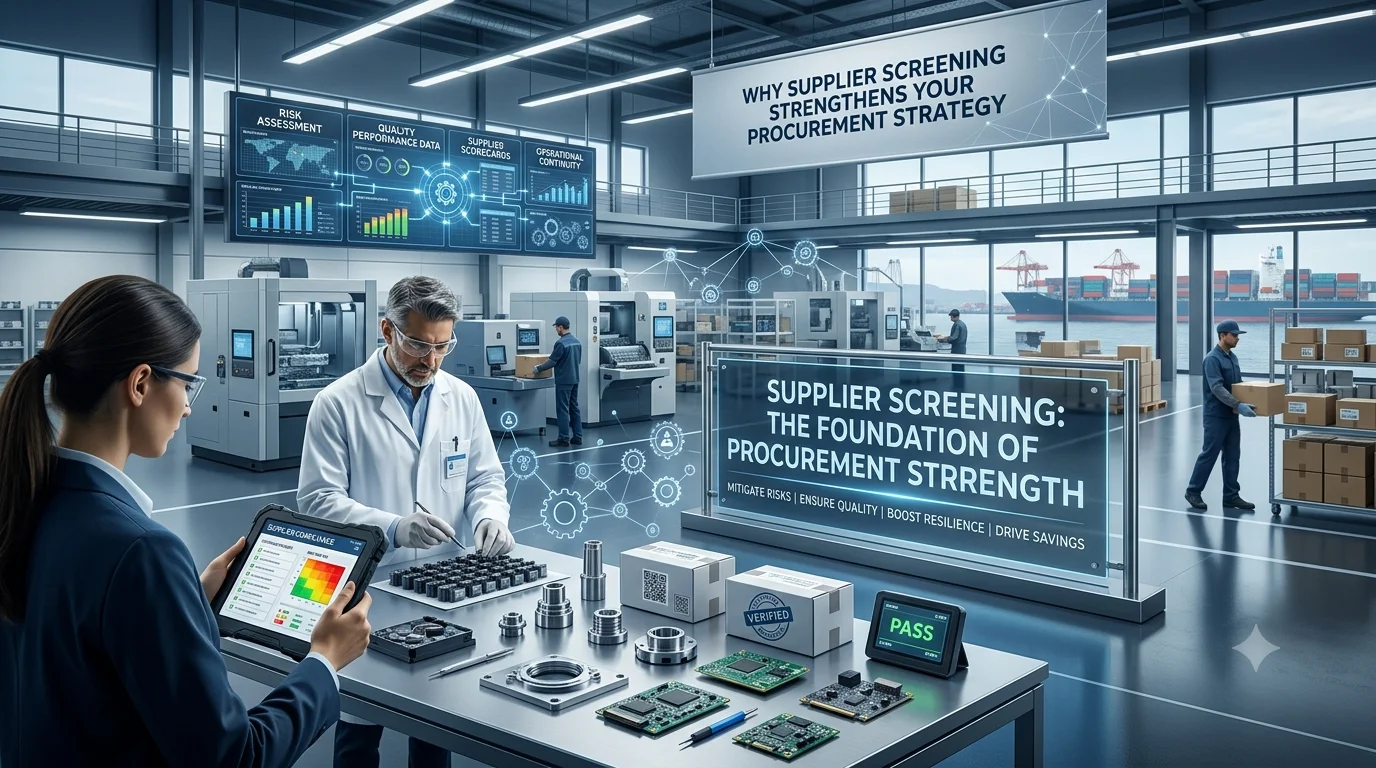
Production Capacity
Capacity becomes especially important when Indiana buyers are looking for recurring or higher-volume supply. Procurement teams should consider whether the supplier appears capable of supporting:
- Expected annual volume
- Peak demand
- Repeat orders
- Production schedules
- Future volume growth
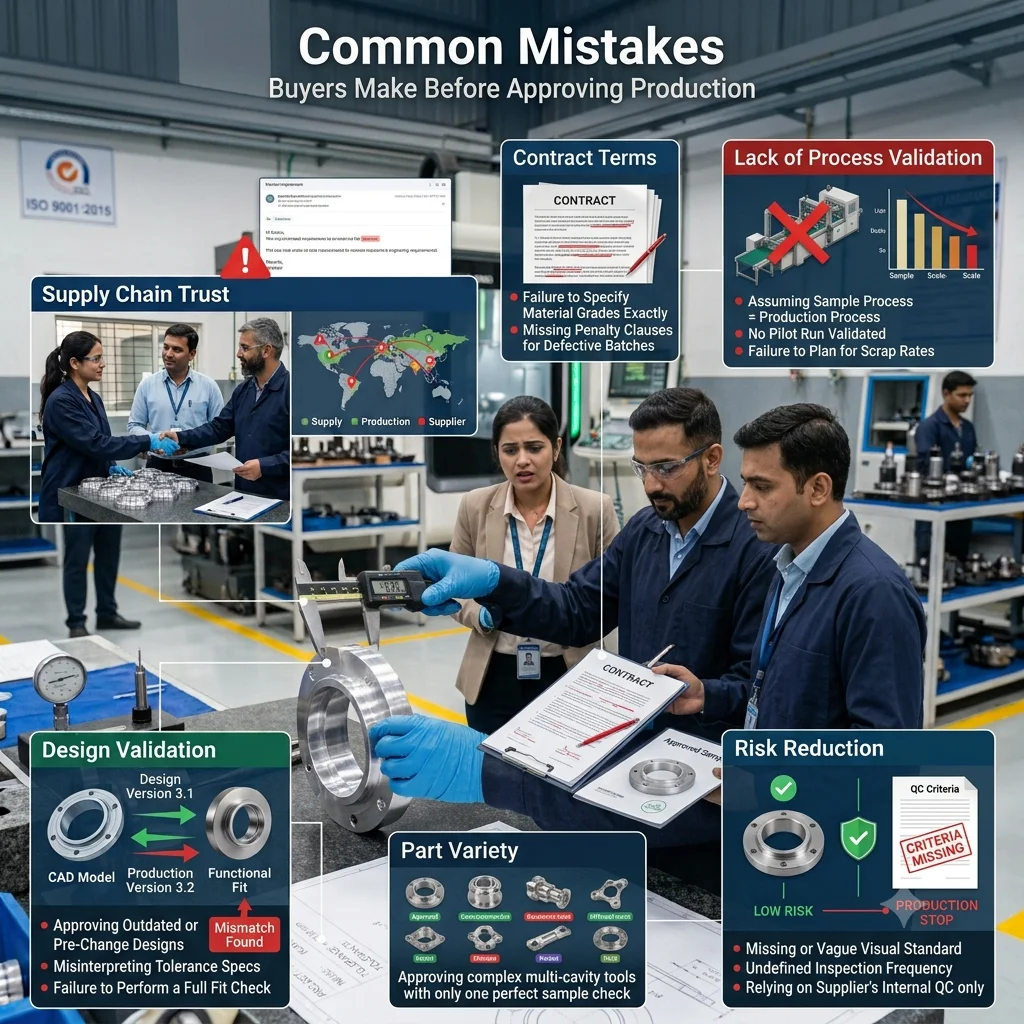
Technical Fit
A supplier may manufacture similar products without being suitable for a specific technical requirement. Screening can consider factors such as:
- Materials
- Dimensions
- Tolerances
- Product complexity
- Drawings
- Finishing
- Assembly requirements
Quality Expectations
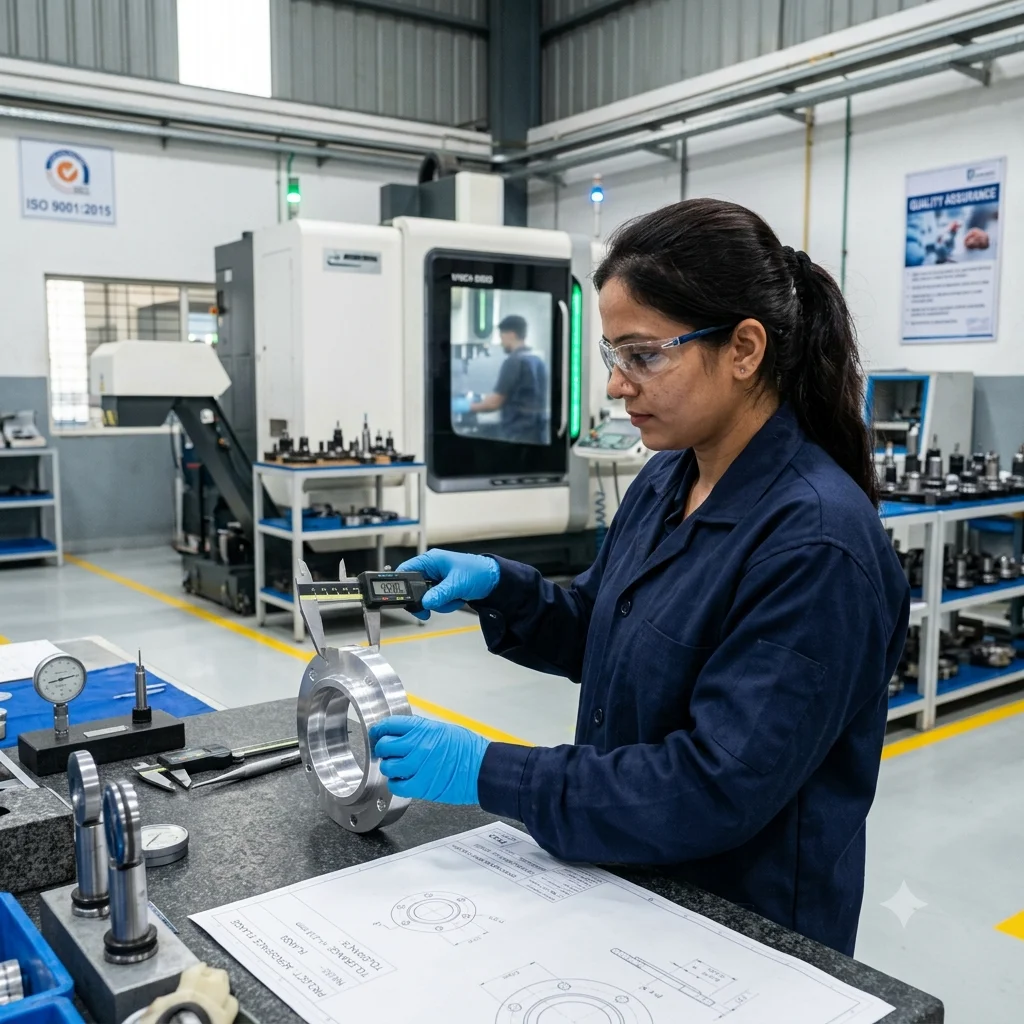
Quality requirements should be considered before a supplier moves too far through the sourcing process. The appropriate evaluation depends on the product and buyer requirements.
Commercial Fit:
Supplier suitability is also influenced by commercial considerations. These may include:
- Minimum order quantities
- Lead times
- Pricing expectations
- Payment terms
- Packaging
- Export requirements
Indiana's Manufacturing Buyers Need More Than a Supplier List
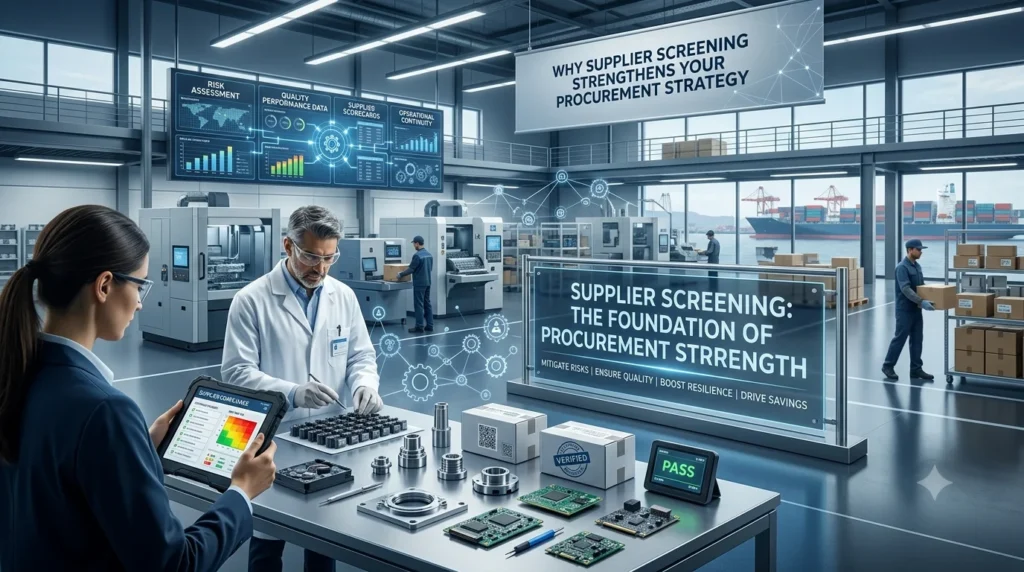
Indiana has a substantial manufacturing and industrial base, which means procurement requirements can be technically specific.
A company sourcing an engineered component may have very different supplier-selection criteria from a distributor sourcing a standard commercial product. For this reason, screening should be connected to the buyer’s requirement rather than applied as a generic checklist.
Procurement Consultant Insight
The best supplier is not necessarily the supplier with the most impressive capabilities. It is the supplier whose capabilities align with the buyer’s requirements.
This is why procurement teams should avoid evaluating suppliers in isolation. A supplier should be considered against: Product + Process + Volume + Quality + Commercial Requirements
When these factors are evaluated together, the supplier shortlist becomes more meaningful.

Mini Procurement Scenario: Indiana Industrial Buyer
An Indiana manufacturer asks for help sourcing a custom component from India. Supplier discovery identifies 15 potential manufacturers; The procurement team could send an RFQ to all 15. but doing so creates unnecessary work. Instead, the suppliers are screened against:
- Relevant manufacturing process
- Product experience
- Production capability
- Expected volume
- Technical requirements
- Quality expectations
- Commercial suitability
After screening, only a smaller group may warrant detailed RFQs. The procurement team can then spend more time comparing suppliers that have already passed the initial suitability criteria.
Basic Supplier Review vs. Structured Screening
|
Basic Review |
Structured Supplier Screening |
|
Reviews website information |
Reviews supplier against buyer requirements |
|
May focus on product range |
Considers product and process fit |
|
Limited capacity assessment |
Considers expected production needs |
|
Generic supplier comparison |
Requirement-specific comparison |
|
Large supplier pool may remain |
Supplier pool becomes more focused |
|
RFQ may be sent prematurely |
RFQ follows initial suitability assessment |
Common Supplier Screening Mistakes
A supplier saying it makes a product does not automatically mean it can meet the buyer’s requirements.
A supplier may be technically capable but unable to support the required volume.
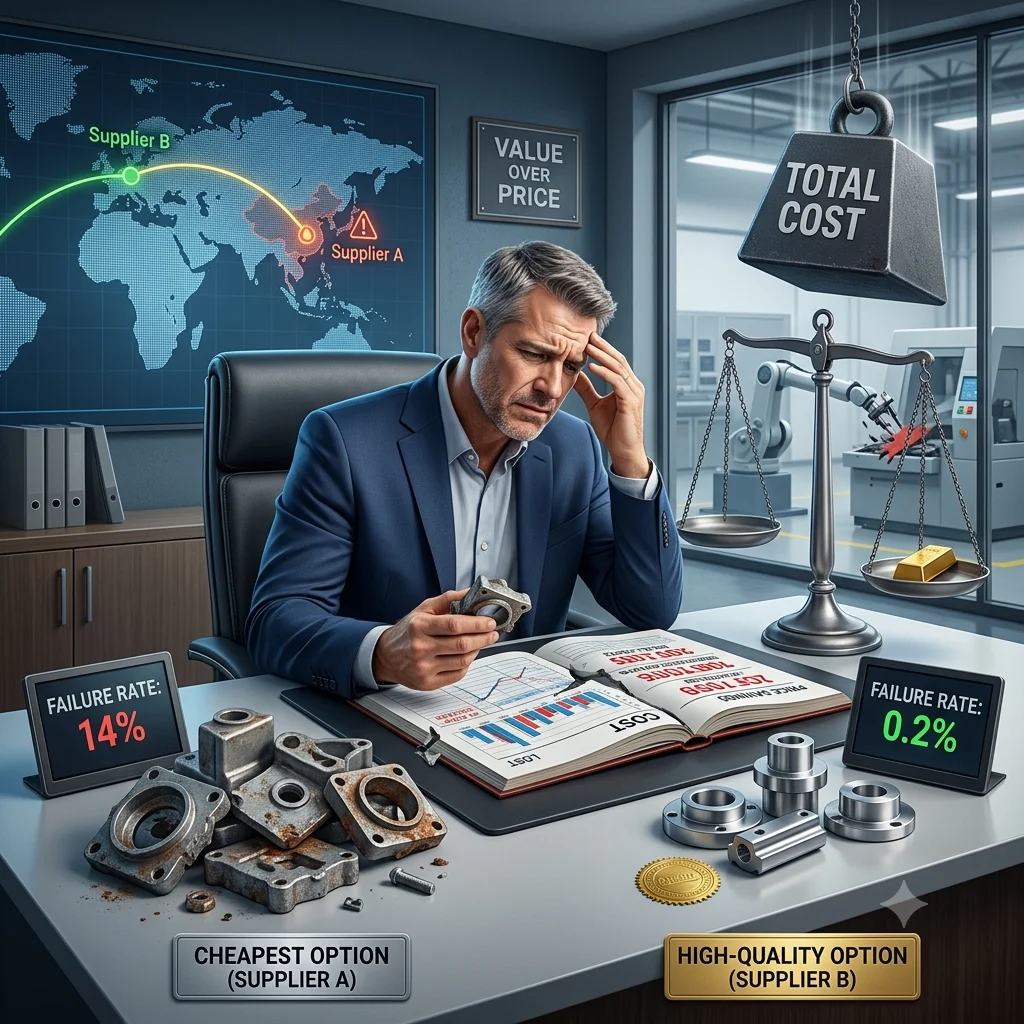
Price matters, but comparing prices before establishing supplier suitability can create misleading conclusions.
Certifications can be relevant, but supplier suitability also depends on capability, capacity, technical fit, and commercial requirements.
Different products require different screening priorities.
Supplier discovery identifies candidates. It does not replace screening, qualification, sampling, or commercial evaluation.
How Procurement Leaders Think Differently
Less experienced sourcing teams often ask:“Does this supplier make the product?” Experienced procurement teams ask: “Can this supplier make our product, at our required volume, to our required specifications, under commercially workable conditions?”
That is the difference between supplier identification and supplier screening.
Supplier Screening Decision Matrix
|
Screening Factor |
Priority |
Key Question |
|
Product capability |
High |
Can the supplier manufacture the required product? |
|
Process capability |
High |
Does its manufacturing process match the requirement? |
|
Technical fit |
High |
Can it work to the required specifications? |
|
Production capacity |
High |
Can it support expected volumes? |
|
Quality requirements |
High |
Is its quality approach appropriate? |
|
Lead time |
Medium/High |
Can expected delivery requirements be supported? |
|
Commercial fit |
Medium/High |
Are terms potentially workable? |
|
Export suitability |
Medium |
Can it support international buyers? |
|
Long-term potential |
Medium |
Could it support recurring requirements? |
Supplier Screening vs. Supplier Qualification
|
Supplier Screening |
Supplier Qualification |
|
Earlier procurement stage |
Deeper evaluation stage |
|
Narrows potential suppliers |
Establishes stronger evidence of suitability |
|
Based on available supplier information |
Can involve samples, documentation, and further evaluation |
|
Helps decide who receives RFQs |
Helps determine whether a supplier should move toward production |
|
Faster initial assessment |
More detailed process |
Screening helps determine who deserves further attention.
Qualification helps determine whether the supplier is ready for a stronger sourcing relationship.
What Happens After Supplier Screening?
Once potential suppliers have been screened, the procurement process can move into detailed RFQ coordination. The overall sourcing journey becomes:
Supplier Discovery → Supplier Screening → RFQ Coordination → Quote Review & Comparison → Sampling & Qualification → Ongoing Sourcing
Each stage answers a different procurement question.
FAQs About Supplier Screening Services in Indiana
What is supplier screening compared with supplier discovery?
Supplier discovery identifies potential Indian suppliers. Supplier screening evaluates those suppliers against the buyer’s actual product, process, technical, capacity, quality, and commercial requirements.
Why should Indiana companies screen suppliers before sending RFQs?
Screening can help reduce the number of poorly matched suppliers entering the quotation process. This can make RFQ management and subsequent comparison more focused.
What criteria should be used to screen an Indian supplier?
Criteria can include manufacturing capability, production capacity, technical fit, quality expectations, lead time, commercial requirements, and suitability for international sourcing.
Does supplier screening guarantee that a supplier is qualified?
No. Screening is an early-stage evaluation. Further quotation review, sampling, documentation review, and qualification may still be required depending on the sourcing requirement.
Is supplier screening more important for technical products?
It can be particularly valuable for technically complex products because manufacturing capability, tolerances, materials, process knowledge, and capacity can significantly affect supplier suitability.
Should price be part of supplier screening?
Commercial fit can be considered during screening, but price should not be the only or primary criterion before technical and operational suitability has been established.
Can Kaizen screen Indian suppliers for Indiana businesses?
Yes. Kaizen’s sourcing process supports U.S. businesses in moving from supplier identification toward supplier evaluation, RFQs, quotation comparison, sampling, and ongoing sourcing support.
What comes after supplier screening?
The next stage is typically RFQ Coordination, where relevant suppliers can be approached for detailed quotations based on the buyer’s sourcing requirements.
Key Takeaways for Supplier Screening Services in Indiana
Continue Your Procurement Journey
Finding potential Indian manufacturers is only the beginning. After screening, Indiana procurement teams can move into RFQ Coordination, where supplier requirements are communicated and quotations are requested in a structured manner.
Supplier Discovery → Supplier Screening → RFQ Coordination
If your Indiana business is ready to move from potential suppliers toward a focused sourcing shortlist, Kaizen Global Sourcing can support the next stage.
Need help screening Indian suppliers for your Indiana business?
Start a sourcing conversation with Kaizen Global Sourcing.