
Sampling & Qualification Support in Pennsylvania
A Supplier's Capability Should Be Validated Before Production
Selecting a supplier and agreeing on commercial terms are important sourcing milestones, but neither confirms that the manufacturer can consistently deliver the required product.
For businesses in Pennsylvania sourcing products, components, or custom manufacturing from India, sampling and qualification provide an important checkpoint before moving into larger production commitments. A sample can help procurement teams evaluate whether the supplier’s actual output matches the agreed specifications. But qualification should go further.
It can also help determine whether the supplier has the manufacturing capability, quality processes, documentation, and production readiness required for the project. At Kaizen Global Sourcing, Sampling & Qualification Support is positioned as part of the wider sourcing process:
Discover → Screen → Request → Compare → Qualify → Manage
The purpose is to provide stronger evidence before a business moves from supplier selection into production.

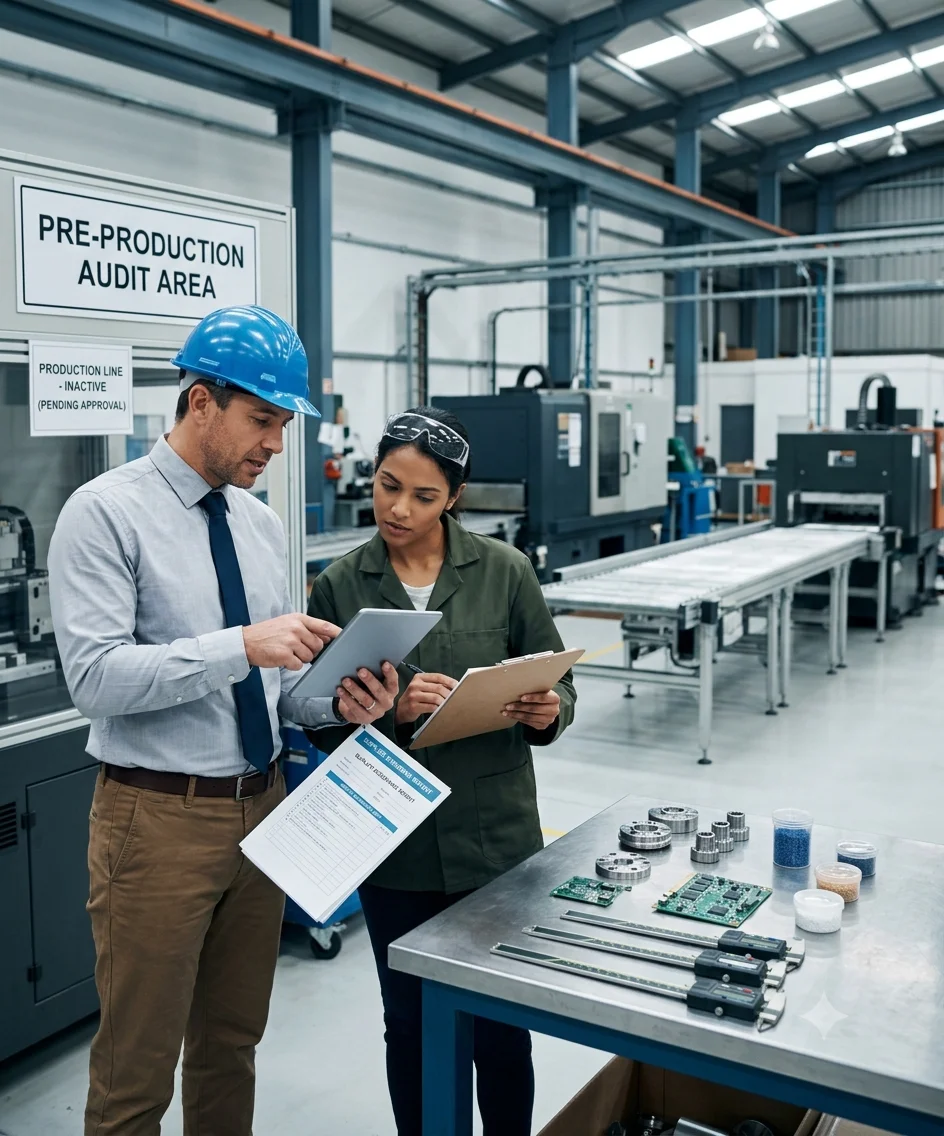
Why Sampling & Qualification Matters
Selecting a supplier and agreeing on commercial terms are important sourcing milestones, but neither confirms that the manufacturer can consistently deliver the required product.
For businesses in Pennsylvania sourcing products, components, or custom manufacturing from India, sampling and qualification provide an important checkpoint before moving into larger production commitments. A sample can help procurement teams evaluate whether the supplier’s actual output matches the agreed specifications. But qualification should go further.
It can also help determine whether the supplier has the manufacturing capability, quality processes, documentation, and production readiness required for the project. At Kaizen Global Sourcing, Sampling & Qualification Support is positioned as part of the wider sourcing process:
Discover → Screen → Request → Compare → Qualify → Manage
The purpose is to provide stronger evidence before a business moves from supplier selection into production.

Why Pennsylvania Businesses Need Supplier Qualification
Pennsylvania has significant activity across advanced manufacturing, medical devices, pharmaceuticals, aerospace, industrial machinery, chemicals, metals, energy, and other specialised industries. Businesses in these sectors may require suppliers to meet detailed specifications and quality expectations.
A manufacturer that appears suitable during supplier discovery may still require validation before production. For Pennsylvania companies sourcing from India, sampling can provide an opportunity to identify issues while changes are still manageable. Instead of discovering a problem after a large production order has begun, procurement teams can use the qualification stage to ask:
“Can this supplier consistently deliver what we have specified?”
Sample Approval vs. Supplier Qualification
These are related but different procurement activities.
Sample Approval | Supplier Qualification |
Focuses primarily on the product sample | Evaluates product and supplier readiness |
Checks specified characteristics | Considers broader manufacturing capability |
Product-level decision | Supplier-level decision |
May involve limited testing | Can involve multiple validation criteria |
Supports sample acceptance | Supports production-readiness decision |
A supplier can produce an acceptable sample while still requiring additional qualification before full-scale production.
Why One Good Sample Is Not Always Enough
An acceptable sample demonstrates what a supplier produced under particular circumstances. It does not automatically prove:
This is why qualification should be based on the actual risk and complexity of the sourcing project. For a simple product, qualification may be relatively straightforward. For a precision component, engineered product, or high-value production requirement, a more detailed qualification process may be appropriate.
How Kaizen Approaches Sampling & Qualification
Kaizen Global Sourcing can help businesses coordinate the transition from supplier selection to production readiness. Depending on the project, support may involve:
Helping communicate sample requirements and specifications to the supplier.
Ensuring the supplier understands the agreed product and quality expectations.
Helping identify areas that require clarification or further validation.
Supporting the evaluation of manufacturing readiness against the buyer’s requirements.
Coordinating communication when modifications or corrective actions are required.
The objective is to create a clearer decision point before larger production commitments are made.
Procurement Consultant's Insight
A sample should answer more than “Does the product look acceptable?” It should help procurement teams determine whether the supplier has demonstrated enough capability to justify moving toward production.
Mini Procurement Scenario
A Pennsylvania industrial manufacturer shortlisted an Indian supplier for a custom-engineered component.
The supplier’s quotation was competitive and the initial sample appeared to meet the primary dimensional requirements. During qualification, however, the procurement team identified additional requirements related to inspection documentation and packaging.
The supplier addressed those requirements before production approval. The example demonstrates why qualification is valuable: the product sample may be acceptable while the broader production requirements still need alignment.
Basic Sample Check vs. Structured Qualification
Basic Sample Check | Structured Qualification |
Checks whether the sample appears acceptable | Evaluates product and supplier readiness |
Limited criteria | Requirement-specific criteria |
Product-focused | Product + supplier-focused |
May overlook production considerations | Considers production capability |
Supports sample acceptance | Supports production decision |
A structured approach gives procurement teams a broader view before committing to full production.
What Should Pennsylvania Businesses Validate?
The exact criteria depend on the sourcing requirement, but procurement teams may consider:
Does the sample meet the agreed technical specifications?
Does the product use the required material or grade?
Are measurements within the required limits?
Does the product meet defined quality expectations?
Can the supplier reproduce the required specifications consistently?
Can the manufacturer support expected volumes?
Can the supplier provide the required quality, testing, certification, or production records?
Does packaging meet transportation and buyer requirements?
The objective is to validate the areas that matter most to the specific procurement project.
Sampling & Qualification vs. Simply Trusting Supplier Claims
Supplier Claims Alone | Sampling & Qualification |
Relies primarily on supplier statements | Adds practical validation |
Capability is largely assumed | Capability is evaluated |
Quality may remain uncertain | Product requirements can be checked |
Issues may emerge during production | Issues can be identified earlier |
Higher uncertainty before commitment | Better evidence for production decisions |
Qualification does not eliminate every sourcing risk, but it can help businesses make production decisions with better information.
What Should Pennsylvania Businesses Validate?
Sampling and qualification represent the transition from commercial supplier selection to production confidence.
The sourcing journey becomes:
Supplier Discovery → Supplier Screening → RFQ Coordination → Quote Review → Sampling & Qualification → Ongoing Sourcing
Each stage answers a different question:
Who could manufacture this?
Which suppliers appear suitable?
What will they offer?
Which proposal provides the strongest value?
Can the selected supplier deliver the requirement?
How do we maintain the supplier relationship?
For Pennsylvania businesses sourcing from India, this structured progression can provide a clearer procurement framework than moving directly from a supplier quotation to full production.
How Procurement Leaders Think Differently
Experienced procurement teams understand that approving a sample and qualifying a supplier are not necessarily the same decision. A sample may meet the immediate product requirement while broader questions about production capability, consistency, documentation, and capacity still need to be answered.
Traditional Approach | Strategic Qualification Approach |
Approve one acceptable sample | Evaluate sample plus production readiness |
Focus mainly on product appearance | Review requirements relevant to the project |
Move quickly into production | Resolve important qualification issues first |
Assume one successful sample proves capability | Consider repeatability and supplier capability |
React to quality problems later | Identify potential issues before larger commitments |
The purpose is not to make qualification unnecessarily complicated. It is to make the right checks before production risk increases.
Sample Approval vs. Full Supplier Qualification
Sample Approval | Full Supplier Qualification |
Primarily product-focused | Product and supplier-focused |
Determines whether a sample meets requirements | Evaluates broader production readiness |
May involve limited testing | Can involve multiple validation criteria |
Can be completed relatively quickly | May require additional supplier validation |
Supports sample acceptance | Supports production approval |
For straightforward products, the process may be relatively simple. For technically complex or higher-risk products, broader qualification can be more appropriate.
Without Qualification vs. With Qualification
Without Structured Qualification | With Structured Qualification |
Greater uncertainty before production | Better visibility before production |
Issues may appear after production begins | Potential issues identified earlier |
Supplier capability largely assumed | Capability evaluated against requirements |
Greater possibility of rework | More opportunity for corrective action |
Reactive quality management | More proactive procurement planning |
Qualification does not guarantee that every future production run will be perfect. It provides a stronger information base for the production decision.
Common Sampling & Qualification Mistakes
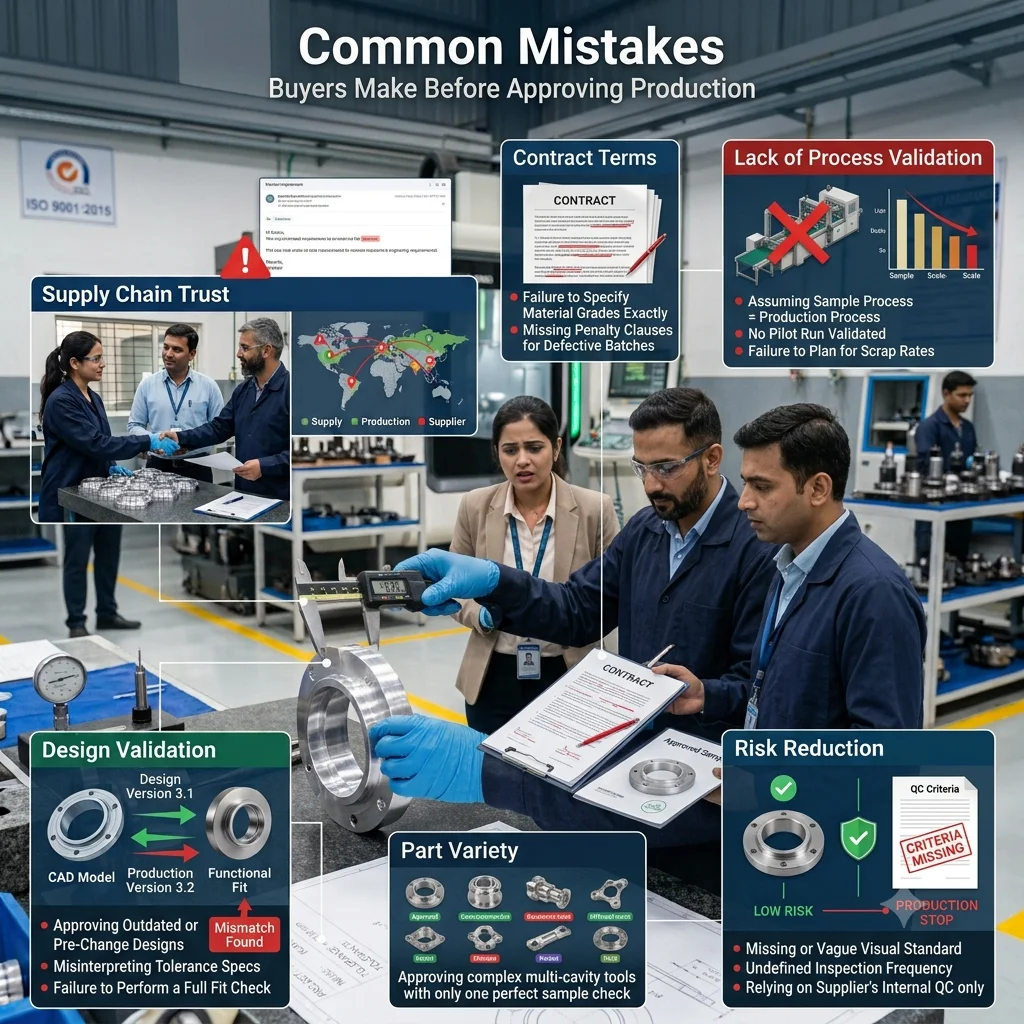
One acceptable sample demonstrates a specific production result. It does not automatically prove that the supplier can reproduce the same standard at scale.
A precision-machined component, medical device component, packaging product, and standard industrial item may require very different validation criteria.
Depending on the project, inspection reports, material records, certifications, testing results, drawings, and other documentation may be important.
If specifications or requirements change during qualification, the agreed changes should be clearly communicated and documented.
Outstanding technical, quality, or commercial issues should be addressed before making larger production commitments.
The objective is to validate the areas that matter most to the specific procurement project.
Decision Matrix — Where Does Qualification Fit?
Procurement Situation | Recommended Kaizen Service |
Need to identify manufacturers | Supplier Discovery |
Need to evaluate potential suppliers | Supplier Screening |
Need structured supplier quotations | RFQ Coordination |
Need to compare supplier proposals | Quote Review & Comparison |
Need to validate supplier and product readiness | Sampling & Qualification Support |
Need continuing supplier coordination | Ongoing Sourcing Desk |
This sequence gives procurement teams a logical progression from supplier identification to production and long-term supplier management.
Questions Procurement Managers Frequently Ask
How many samples should a business request?
There is no universal number. The appropriate sampling approach depends on product complexity, quality requirements, production risk, order volume, and the purpose of the qualification.
How many samples should a business request?
The issue can be documented and discussed with the supplier. Depending on the severity, the supplier may modify the product, provide a revised sample, implement corrective action, or require further validation.
Can supplier qualification reduce production risk?
It can reduce uncertainty by identifying product, manufacturing, documentation, and communication issues before full-scale production.
Should qualification happen before or after supplier selection?
For many products, qualification is an important checkpoint before significant production commitments. The exact process should reflect the product’s complexity and risk.
Supplier Comparison & Sourcing FAQs
Is supplier qualification better than simply approving a sample?
For technically complex or higher-risk sourcing projects, broader supplier qualification can provide more confidence because it evaluates the supplier’s readiness in addition to the product sample.
What is the difference between sample inspection and supplier qualification?
Sample inspection focuses on whether a specific product or sample meets defined requirements. Supplier qualification considers whether the manufacturer is capable of consistently meeting those requirements during production.
Should Pennsylvania businesses qualify every Indian supplier before production?
The appropriate level of qualification depends on the product, industry, production risk, order value, and technical requirements. More complex or higher-risk sourcing projects may justify more extensive validation.
How does Kaizen compare with handling qualification internally?
The appropriate level of qualification depends on the product, industry, production risk, order value, and technical requirements. More complex or higher-risk sourcing projects may justify more extensive validation.
Is a passed sample enough to select a supplier?
Not always. A successful sample is valuable evidence, but supplier capability, capacity, quality processes, documentation, and production readiness may also need to be considered.
What makes Kaizen different from a supplier marketplace?
A supplier marketplace primarily helps businesses discover manufacturers. Kaizen’s sourcing approach follows a broader procurement journey covering discovery, screening, RFQ coordination, quotation comparison, sampling and qualification, and ongoing sourcing.
Can Kaizen support qualification for technically complex products?
The qualification approach can be adapted to the specific sourcing requirement, including product specifications, sample requirements, quality expectations, documentation, and other relevant validation criteria.
Can Kaizen support qualification for technically complex products?
Once the supplier and product have been sufficiently validated, businesses can move into ongoing supplier coordination, repeat orders, production follow-ups, and future sourcing requirements.
Key Takeaways
Continue Your Procurement Journey
After supplier selection and qualification, the relationship continues. Businesses may need support with:
- Repeat orders
- Production follow-ups
- Supplier communication
- Documentation
- Engineering changes
- Delivery coordination
- New sourcing requirements
- Commercial clarification
Ongoing Sourcing Desk Services provide continued sourcing coordination after a supplier has been selected and qualified. The complete sourcing journey becomes:
Discover → Screen → Request → Compare → Qualify → Manage
From Supplier Qualification to Long-Term Sourcing
For Pennsylvania businesses sourcing from India, supplier qualification provides an important checkpoint before larger production commitments.
Kaizen Global Sourcing can help businesses move from supplier evaluation and sample validation toward a more continuous sourcing relationship, supporting communication and coordination as procurement requirements evolve. The objective is to create a sourcing process that does not stop at “supplier selected”, but continues toward reliable, repeatable international procurement.