
RFQ Coordination Services in India for US Companies
A Well-Written RFQ Can Save Weeks of Back-and-Forth Communication
Kaizen Global Sourcing’s RFQ Coordination Services help businesses manage this stage more effectively by organising supplier communication, coordinating quotation requests, and ensuring manufacturers receive consistent project information before preparing commercial proposals.
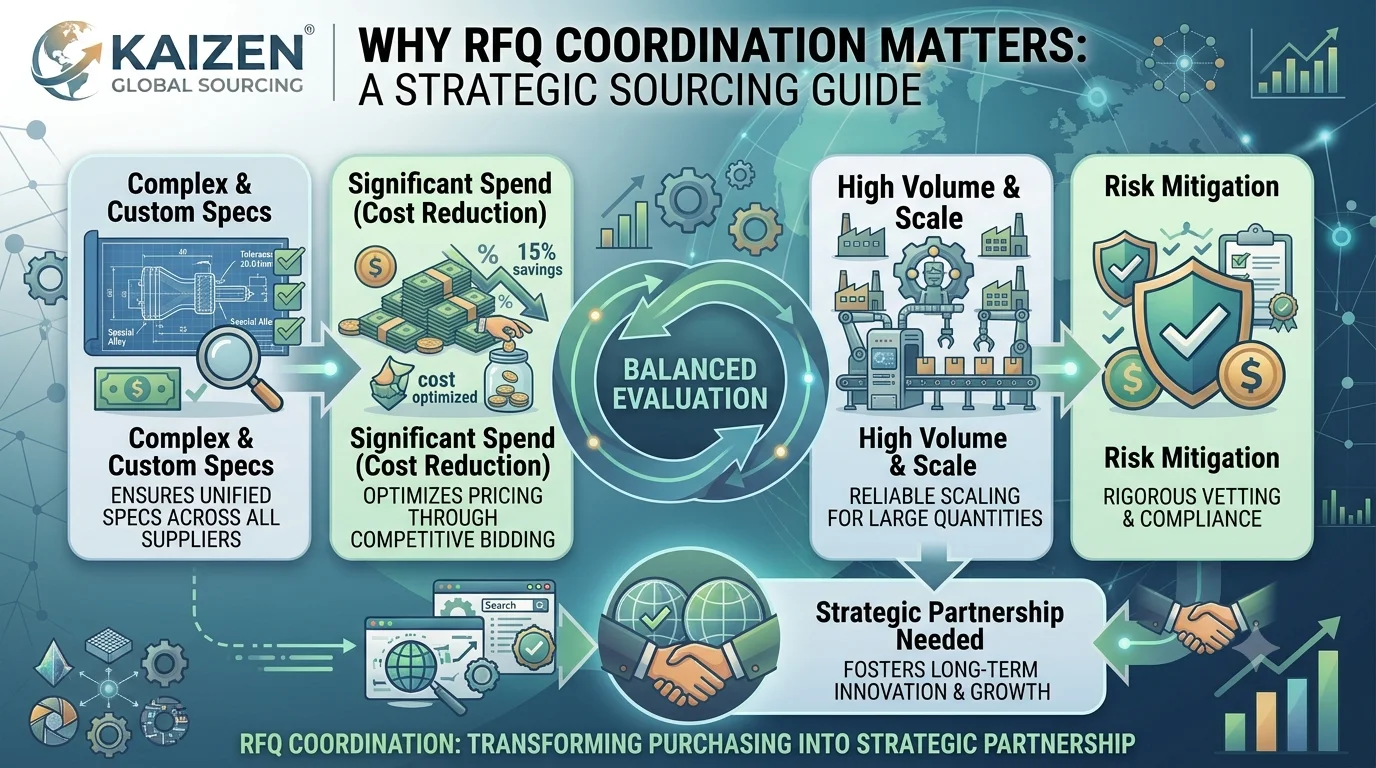
Why RFQ Coordination Matters
An RFQ is more than a request for pricing. It establishes the foundation for supplier communication. The quality of information shared during the RFQ stage often influences how accurately suppliers understand the project, prepare quotations, and respond to technical or commercial questions.
When suppliers receive different information or interpret the same information differently, it becomes difficult to compare quotations fairly. RFQ coordination reduces these communication gaps by creating a more structured approach before quotations are received.
Sending RFQs vs Coordinated RFQ Management
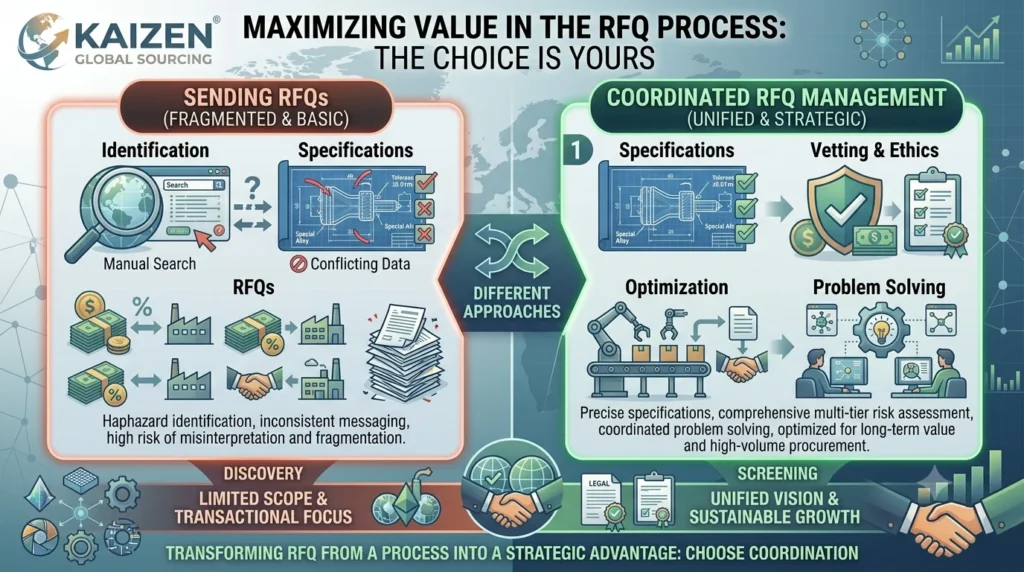
Sending RFQs Independently | Kaizen RFQ Coordination |
Suppliers may interpret requirements differently | Consistent project information shared with suppliers |
Multiple clarification emails | Structured communication throughout the RFQ stage |
Different quotation formats | Easier quotation comparison |
More administrative effort | Coordinated supplier engagement |
Greater risk of misunderstandings | Better alignment before commercial discussions |
The objective isn’t simply to collect quotations. It’s to collect quotations that can be reviewed with greater confidence.
What Information Is Typically Included in an RFQ?
Every sourcing project is different, but suppliers generally require clear project information before preparing quotations.
This may include:
Providing complete information at the beginning helps create a more efficient quotation process.
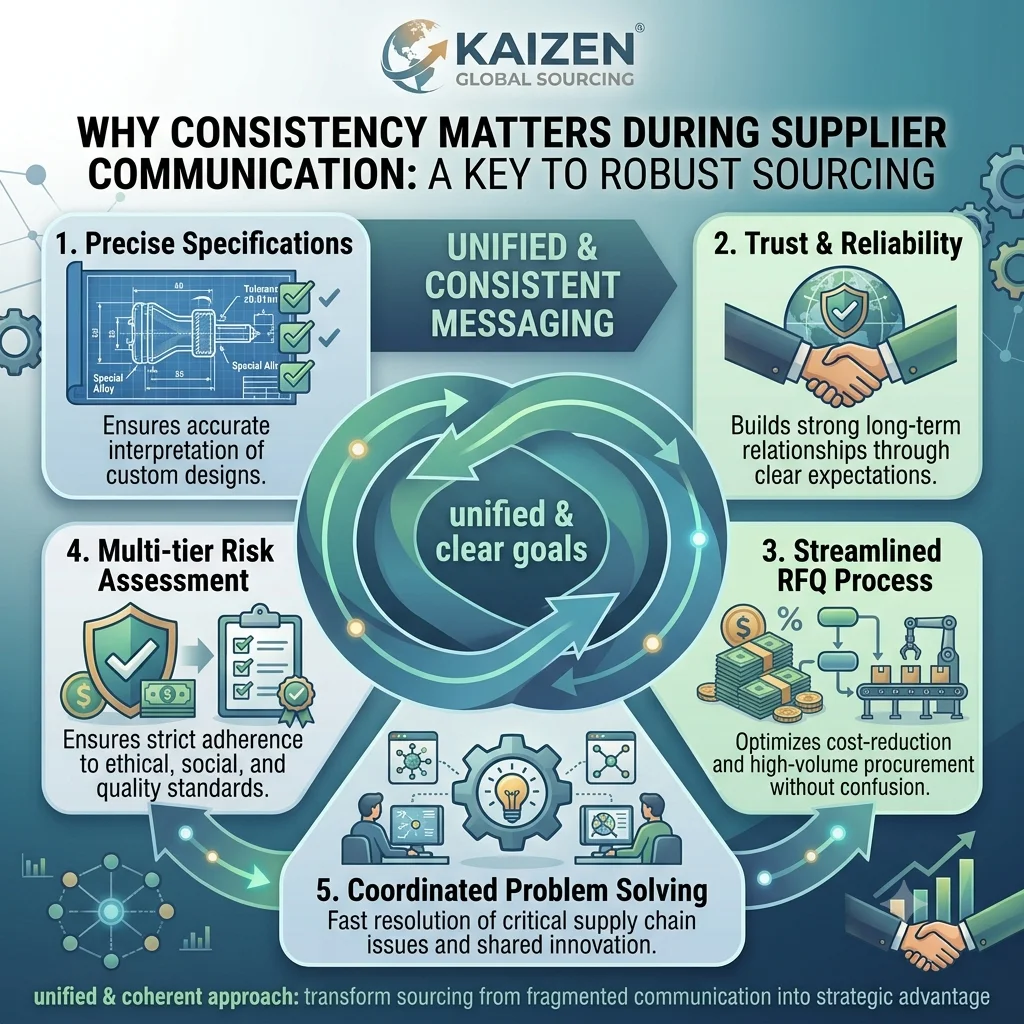
Why Consistency Matters During Supplier Communication
Imagine three suppliers receive the same drawing. One assumes annual production of 5,000 units, another assumes 50,000 units, and a third assumes the material specification can be substituted. Although all three suppliers respond to the same RFQ, their quotations are no longer directly comparable. Coordinating communication before quotations are submitted helps reduce these inconsistencies and creates a stronger foundation for commercial evaluation.
RFQ Coordination vs Quote Review
These services work together but serve different purposes.
RFQ Coordination | Quote Review & Comparison |
Happens before quotations are received | Happens after quotations are submitted |
Focuses on supplier communication | Focuses on evaluating supplier responses |
Helps create consistent quotations | Helps compare supplier proposals |
Supports quotation preparation | Supports commercial decision-making |
Together, they create a more structured sourcing process.
Where RFQ Coordination Fits in the Sourcing Journey
Business Requirement
Supplier Discovery
Supplier Screening
RFQ Coordination
Quote Review & Comparison
Sampling & Qualification Support
Ongoing Sourcing Desk
Each stage builds on the previous one, helping businesses move from supplier identification to informed sourcing decisions.
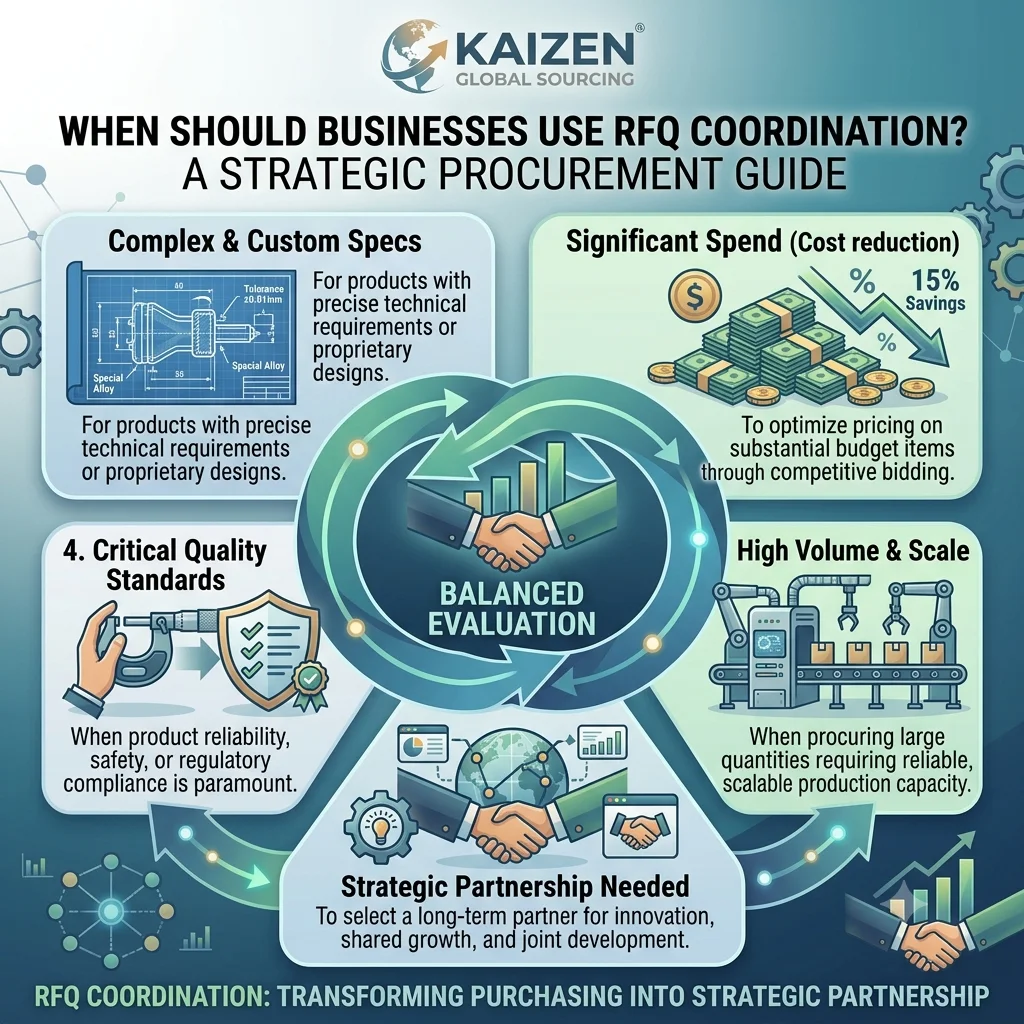
When Should Businesses Use RFQ Coordination?
RFQ Coordination is particularly valuable when:
- Working with multiple suppliers
- Comparing several manufacturing options
- Launching a new product
- Sourcing from India for the first time
- Managing projects with detailed specifications
- Looking for a more organized quotation process
The more complex the sourcing requirement, the more valuable structured RFQ coordination becomes.
Is RFQ Coordination Right for Your Business?
Business Situation | Recommended |
First-time sourcing from India | ✅ Yes |
Multiple supplier quotations | ✅ Yes |
Complex product specifications | ✅ Yes |
New supplier relationships | ✅ Yes |
Existing supplier with repeat production | Depends on project changes |
Expert Insight
Many quotation delays are not caused by suppliers—they’re caused by incomplete or inconsistent project information. A well-coordinated RFQ process helps suppliers respond with greater clarity, allowing buyers to make more informed sourcing decisions.
Helpful Resources
Businesses involved in international procurement may also find these resources useful:
Guidance for U.S. companies engaged in global sourcing and trade.
Import documentation and customs information.
Incoterms® guidance for international commercial transactions.
Related Kaizen Services
Continue your sourcing journey with:
FAQs for RFQ Coordination Services India for US Companies
What is RFQ Coordination?
RFQ Coordination is the process of organising supplier communication and quotation requests to help ensure suppliers receive consistent project information before preparing quotations.
Why is RFQ Coordination important?
It helps improve communication, reduce misunderstandings, and create quotations that are easier to review and compare.
Does RFQ Coordination help compare supplier quotations?
RFQ Coordination supports the quotation process before suppliers submit proposals. Once quotations are received, Quote Review & Comparison helps evaluate supplier responses.
Can RFQ Coordination reduce sourcing delays?
A structured RFQ process can reduce unnecessary clarification requests and improve communication between buyers and suppliers during the quotation stage.
Is RFQ Coordination useful for companies sourcing from India for the first time?
Yes. Businesses new to sourcing from India often benefit from structured communication that helps suppliers understand project requirements before preparing quotations.
Move from Supplier Conversations to Meaningful Quotations
Successful sourcing depends on more than finding capable suppliers. It also depends on how clearly project requirements are communicated during the quotation stage. With Kaizen Global Sourcing’s RFQ Coordination Services, businesses gain a structured approach to managing supplier communication, helping create more consistent quotations, clearer commercial discussions, and better-informed sourcing decisions.